


Can an eddy current flaw detector be used for jewelry inspection?
As a supplier of eddy current flaw detectors, I am often asked about its applicability in various inspection scenarios, and one question that frequently comes up is whether an eddy current flaw detector can be used for jewelry inspection. In this blog, I will delve into this topic, exploring the principles of eddy current flaw detection, the characteristics of jewelry inspection, and discussing the feasibility and potential limitations of using eddy current flaw detectors for jewelry.
Principles of Eddy Current Flaw Detection
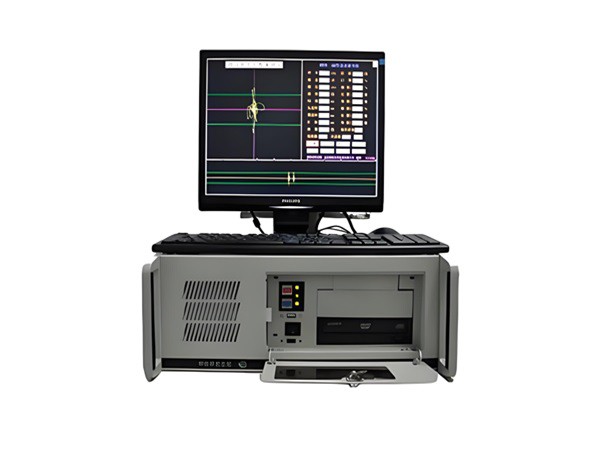
Eddy current flaw detection is a non - destructive testing (NDT) method based on the principle of electromagnetic induction. When an alternating current is passed through a coil, it generates an alternating magnetic field. When this magnetic field interacts with a conductive material, it induces eddy currents within the material. The presence of flaws, such as cracks, voids, or changes in material properties in the conductive material, will disrupt the flow of these eddy currents. This disruption in turn affects the magnetic field around the coil, and by measuring the changes in the impedance of the coil, we can detect the flaws in the material.
The advantages of eddy current flaw detection include high sensitivity, fast detection speed, and the ability to detect surface and near - surface flaws. It is widely used in industries like aerospace, automotive, and metallurgy for quality control of metal components. For example, High - Speed Automatic Eddy Current Flaw Detector for Steel Tubes is used to inspect the integrity of steel tubes to ensure they meet the required quality standards for various applications.
Characteristics of Jewelry Inspection
Jewelry is a unique type of product. It is not only a decorative item but also often has high value, both in terms of material and craftsmanship. Jewelry items can be made from a wide variety of materials, including precious metals such as gold, silver, platinum, and gemstones like diamonds, rubies, and sapphires.
The inspection requirements for jewelry are also diverse. Firstly, there are quality - related inspections, such as checking for internal cracks, porosity, and inclusions in the metal parts. For gemstones, the inspection may involve detecting internal flaws that could affect their clarity and durability. Secondly, there are authenticity and purity inspections. For example, determining the actual gold purity of a gold - plated or gold - filled item is crucial for both the seller and the buyer.
Feasibility of Using Eddy Current Flaw Detectors for Jewelry Inspection
1. Detection of Metal Flaws in Jewelry
Most jewelry contains metal components, whether it is a solid gold ring or a silver - plated pendant. Eddy current flaw detectors can be highly effective in detecting flaws in these metal parts. Similar to other metal inspection applications, the eddy currents induced in the jewelry metal will be disrupted by cracks or porosity.
For example, in a gold bracelet manufacturing process, microscopic cracks could occur during the forging or casting stages. An eddy current flaw detector can quickly scan the bracelet and identify these flaws, helping to prevent defective products from reaching the market. The high sensitivity of eddy current testing means that even very small flaws can be detected, which is essential for maintaining the quality and value of jewelry.
2. Purity Assessment of Precious Metals
Eddy current testing can also be used for a rough assessment of the purity of precious metals in jewelry. Different pure metals have different electrical conductivity properties. For instance, pure gold has a specific conductivity value, while gold alloys with different compositions will have different conductivity characteristics. By measuring the eddy current response in a gold jewelry item, we can get an idea of its relative purity. However, it should be noted that this is only a preliminary assessment and more accurate methods such as chemical analysis are usually required for official purity certification.
Potential Limitations of Using Eddy Current Flaw Detectors for Jewelry Inspection
1. Complex Jewelry Structures
Jewelry often has complex and intricate designs. There may be multiple layers of different materials, small cavities, or complex geometries. These factors can make it difficult to obtain accurate eddy current test results. For example, if a piece of jewelry has a gemstone embedded in a metal setting, the gemstone, which is often a non - conductive material, can interfere with the magnetic field generated by the eddy current detector, making it challenging to accurately detect flaws in the surrounding metal.
2. Detection of Gemstone Flaws
Eddy current flaw detection relies on the conductivity of the material. Gemstones are generally non - conductive or have very low conductivity. Therefore, eddy current flaw detectors are not suitable for directly detecting flaws in gemstones. Other non - destructive testing methods, such as ultrasonic testing or optical microscopy, are more appropriate for gemstone inspection.
3. Surface Finish and Coating
The surface finish and coating of jewelry can also affect the accuracy of eddy current testing. For example, a thick layer of electro - plating or a highly polished surface may cause reflections or interference in the magnetic field, leading to false signals or inaccurate flaw detection results.
Conclusion
In conclusion, eddy current flaw detectors can be a useful tool for certain aspects of jewelry inspection, especially for detecting flaws in metal components and providing a preliminary assessment of precious metal purity. However, due to the complex nature of jewelry, including its diverse materials and intricate designs, eddy current testing has its limitations and should be used in conjunction with other non - destructive testing methods for a comprehensive jewelry inspection.
If you are in the jewelry manufacturing or trading industry and are interested in exploring the use of eddy current flaw detectors for your quality control needs, I encourage you to contact us for further discussion. We can provide you with detailed information about our products, their capabilities, and how they can be customized to meet your specific inspection requirements.
References
- ASNT (American Society for Nondestructive Testing). "Nondestructive Testing Handbook - Volume 3: Eddy Current Testing".
- ISO standards related to non - destructive testing of metals and precious metals.