


As a supplier of eddy current flaw detectors, I am often asked about how these remarkable devices work. Eddy current flaw detectors are widely used in various industries for non - destructive testing (NDT), helping to identify surface and near - surface flaws in conductive materials. In this blog, I will delve into the working principles of an eddy current flaw detector and explain its significance in the field of quality control.
The Basics of Eddy Currents
To understand how an eddy current flaw detector works, we first need to understand what eddy currents are. Eddy currents are induced electrical currents that circulate within conductive materials when they are exposed to a changing magnetic field. This phenomenon is based on Faraday's law of electromagnetic induction, which states that a changing magnetic field will induce an electromotive force (EMF) in a conductor, causing a current to flow.
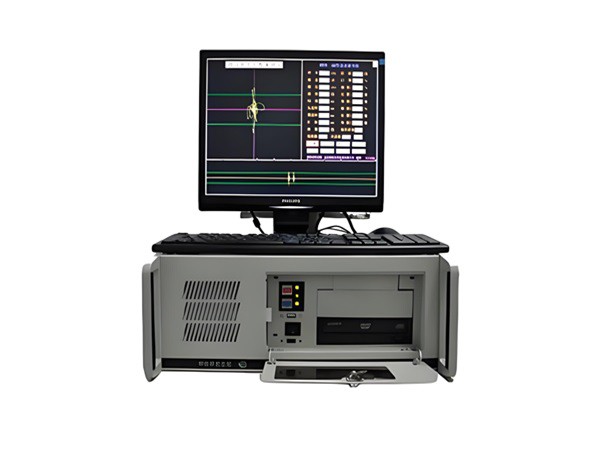
When an alternating current (AC) is passed through a coil, it generates an alternating magnetic field around the coil. When a conductive material is placed within this magnetic field, the changing magnetic flux through the material induces eddy currents in it. These eddy currents, in turn, generate their own magnetic fields that oppose the original magnetic field, according to Lenz's law.
Components of an Eddy Current Flaw Detector
An eddy current flaw detector typically consists of several key components:
- Probe Coil: This is the most crucial part of the flaw detector. The probe coil is usually made of a copper wire wound into a specific shape, such as a circular or rectangular coil. When an AC is applied to the probe coil, it generates the alternating magnetic field that interacts with the test material.
- Oscillator: The oscillator is responsible for generating the alternating current that is fed into the probe coil. It can control the frequency of the AC, which is an important parameter in eddy current testing as different frequencies are suitable for detecting flaws at different depths and in different materials.
- Signal Processor: The signal processor receives the electrical signals from the probe coil. These signals are affected by the interaction between the eddy currents in the test material and the magnetic field of the probe coil. The signal processor analyzes these signals, filters out noise, and extracts relevant information about the flaws in the material.
- Display Unit: The display unit shows the processed signals in a user - friendly format. It can present the results as waveforms, numerical values, or graphical representations, allowing the operator to easily interpret the test results.
Working Process of an Eddy Current Flaw Detector
The working process of an eddy current flaw detector can be divided into the following steps:
- Probe Placement: The operator places the probe coil in close proximity to the surface of the test material. The probe can be handheld for manual inspection or integrated into an automated testing system for high - volume production lines.
- Magnetic Field Generation: The oscillator supplies an AC to the probe coil, generating an alternating magnetic field. When the magnetic field penetrates the conductive test material, eddy currents are induced in the material.
- Interaction with Flaws: If there are flaws, such as cracks, voids, or inclusions, in the test material, the eddy currents will be disrupted. Flaws act as barriers to the flow of eddy currents, causing changes in the distribution and magnitude of the eddy currents. These changes, in turn, affect the magnetic field generated by the eddy currents, which then interacts with the magnetic field of the probe coil.
- Signal Detection and Processing: The probe coil detects the changes in the magnetic field caused by the flaws. These changes are converted into electrical signals, which are sent to the signal processor. The signal processor analyzes the signals, comparing them with a baseline signal obtained from a defect - free area of the material. If the deviation from the baseline is significant, it indicates the presence of a flaw.
- Result Display: The processed signals are displayed on the display unit. The operator can then determine the location, size, and type of the flaw based on the displayed information.
Factors Affecting Eddy Current Testing
Several factors can affect the performance of an eddy current flaw detector:
- Material Conductivity: Different materials have different electrical conductivities. Eddy currents are more easily induced in materials with high conductivity, such as copper and aluminum. Materials with low conductivity, like stainless steel, may require different testing parameters, such as higher frequencies, to achieve effective flaw detection.
- Frequency Selection: The frequency of the alternating current in the probe coil is a critical factor. Lower frequencies can penetrate deeper into the material, making them suitable for detecting subsurface flaws. Higher frequencies, on the other hand, are more sensitive to surface flaws but have a limited penetration depth.
- Lift - off: Lift - off refers to the distance between the probe coil and the surface of the test material. A larger lift - off can reduce the strength of the magnetic field interaction between the probe and the material, leading to a decrease in the sensitivity of the flaw detector. Therefore, it is important to maintain a consistent lift - off during testing.
- Surface Roughness: A rough surface can cause variations in the eddy current signals, making it more difficult to detect flaws accurately. In some cases, surface preparation, such as grinding or polishing, may be required to improve the testing results.
Applications of Eddy Current Flaw Detectors
Eddy current flaw detectors have a wide range of applications in various industries:
- Aerospace Industry: In the aerospace industry, eddy current flaw detectors are used to inspect critical components, such as turbine blades, aircraft wings, and landing gear. Detecting flaws in these components is crucial for ensuring the safety and reliability of aircraft.
- Automotive Industry: Eddy current testing is used to inspect engine parts, transmission components, and brake discs in the automotive industry. By detecting flaws early, manufacturers can prevent product failures and improve the quality of their vehicles.
- Manufacturing Industry: In the manufacturing of metal products, eddy current flaw detectors are used to inspect raw materials, semi - finished products, and finished products. This helps to ensure that the products meet the required quality standards and reduces the risk of defective products reaching the market.
- Power Generation Industry: Eddy current testing is used to inspect steam generator tubes, turbine rotors, and other components in power plants. Detecting flaws in these components can prevent costly downtime and ensure the safe and efficient operation of power plants.
Our Eddy Current Flaw Detectors
As a leading supplier of eddy current flaw detectors, we offer a wide range of products to meet the diverse needs of our customers. Our Steel Tube Eddy Current Flaw Detector is specifically designed for the inspection of steel tubes. It features high - sensitivity probes, advanced signal processing technology, and a user - friendly interface, making it suitable for both manual and automated testing.
Our eddy current flaw detectors are known for their reliability, accuracy, and ease of use. We also provide comprehensive technical support and after - sales service to ensure that our customers can make the most of our products.
Contact Us for Procurement
If you are interested in our eddy current flaw detectors or have any questions about eddy current testing, please feel free to contact us. We are more than happy to discuss your specific requirements and provide you with the best solutions. Whether you are in the aerospace, automotive, manufacturing, or power generation industry, our eddy current flaw detectors can help you improve the quality of your products and ensure the safety of your operations.
References
- Beck, A. H. (2009). Nondestructive Testing: Theory, Techniques, and Applications. CRC Press.
- McMaster, R. C. (1996). Eddy - Current Testing Handbook. ASNT.
- Rose, J. L. (2014). Ultrasonic Waves in Solid Media. Cambridge University Press.