


Eddy current flaw detectors are essential tools in the non - destructive testing (NDT) industry, widely used for detecting flaws in conductive materials such as metals. However, one of the most common challenges faced when using eddy current flaw detectors is dealing with false signals. As a supplier of eddy current flaw detectors, I understand the importance of addressing this issue to ensure accurate and reliable testing results. In this blog, I will share some effective strategies on how to deal with false signals in an eddy current flaw detector.
Understanding False Signals in Eddy Current Flaw Detectors
Before we discuss how to deal with false signals, it is crucial to understand what causes them. False signals can be generated due to various factors, including:
- Surface Conditions: Irregularities on the surface of the test piece, such as scratches, roughness, or dirt, can cause eddy current disruptions and generate false signals.
- Material Variations: Differences in material properties, such as conductivity, permeability, and thickness, can also lead to false signals. For example, a change in the material's conductivity due to heat treatment or alloy composition can affect the eddy current response.
- Electromagnetic Interference: External electromagnetic fields from nearby equipment, power lines, or radio frequency sources can interfere with the eddy current testing process and produce false signals.
- Probe Issues: Problems with the eddy current probe, such as damage, improper alignment, or incorrect selection, can result in false signals.
Strategies to Deal with False Signals
1. Surface Preparation
Proper surface preparation is the first step in reducing false signals. The test surface should be clean, smooth, and free of any contaminants. This can be achieved by using appropriate cleaning methods, such as grinding, polishing, or chemical cleaning. For example, if the test piece has a rough surface, grinding it to a smooth finish can significantly reduce the interference caused by surface irregularities. Additionally, removing dirt, oil, or rust from the surface can improve the accuracy of the eddy current testing.
2. Calibration and Standardization
Regular calibration of the eddy current flaw detector is essential to ensure accurate and reliable results. Calibration should be performed using reference standards with known flaw sizes and characteristics. By comparing the test results with the reference standards, any false signals can be identified and eliminated. Moreover, standardizing the testing procedure, including the probe type, test frequency, and gain settings, can help minimize variations in the test results and reduce the occurrence of false signals.
3. Signal Analysis and Filtering
Advanced signal analysis techniques can be used to distinguish between true flaw signals and false signals. For instance, using frequency analysis, time - domain analysis, or pattern recognition algorithms, it is possible to identify the unique characteristics of flaw signals and filter out the false ones. Many modern eddy current flaw detectors are equipped with built - in signal processing capabilities that can automatically filter out noise and false signals, providing more accurate test results.
4. Probe Selection and Maintenance
Choosing the right probe for the specific testing application is crucial. Different probes have different sensitivities, frequencies, and geometries, which can affect the detection of flaws and the generation of false signals. For example, a high - frequency probe is more suitable for detecting surface flaws, while a low - frequency probe can penetrate deeper into the material. Regular maintenance of the probe, including inspection for damage, cleaning, and proper storage, is also important to ensure its optimal performance and reduce the likelihood of false signals.
5. Environmental Control
Minimizing electromagnetic interference from the testing environment is essential to reduce false signals. This can be achieved by using shielding materials, such as metal enclosures or conductive coatings, to block external electromagnetic fields. Additionally, keeping the testing equipment away from sources of interference, such as power lines and electrical motors, can help improve the signal - to - noise ratio and reduce the occurrence of false signals.
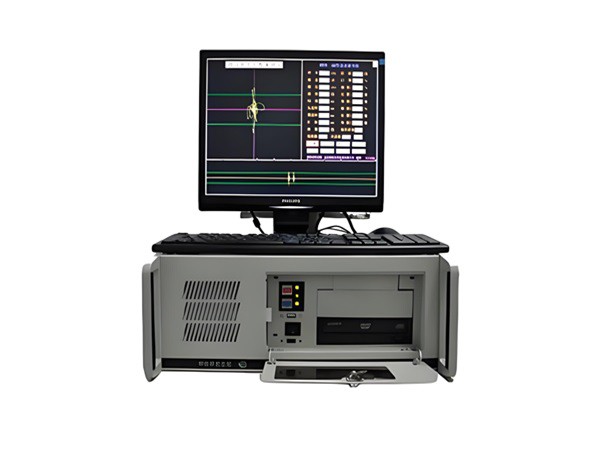
Our High - Speed Automatic Eddy Current Flaw Detector for Steel Tubes
As a leading supplier of eddy current flaw detectors, we offer a High - Speed Automatic Eddy Current Flaw Detector for Steel Tubes. This state - of - the - art detector is designed to provide high - speed and accurate flaw detection for steel tubes. It incorporates advanced signal processing technology to effectively filter out false signals and ensure reliable testing results.
The detector is equipped with a high - precision probe that can detect a wide range of flaws, including cracks, holes, and inclusions. Its automatic testing function allows for continuous and efficient inspection of steel tubes, increasing productivity and reducing labor costs. Moreover, the user - friendly interface and intuitive operation make it easy for operators to use and maintain.
Conclusion
Dealing with false signals in an eddy current flaw detector is a complex but essential task to ensure the accuracy and reliability of non - destructive testing. By understanding the causes of false signals and implementing the strategies mentioned above, such as surface preparation, calibration, signal analysis, probe selection, and environmental control, it is possible to minimize the occurrence of false signals and obtain more accurate test results.
If you are in need of an eddy current flaw detector or have any questions about dealing with false signals, please feel free to contact us for further discussion and potential procurement. Our team of experts is always ready to provide you with the best solutions and support.
References
- Nondestructive Testing Handbook, Volume 4: Eddy - Current Testing, American Society for Nondestructive Testing.
- Eddy Current Testing: Principles and Applications, by David A. Scott.