


Hey there! As a supplier of eddy current flaw detectors, I often get asked about the power source requirements for these nifty devices. So, I thought I'd break it down for you in this blog post.
First off, let's understand what an eddy current flaw detector does. It's a non - destructive testing tool that uses electromagnetic induction to detect flaws in conductive materials. Whether it's metal pipes, sheets, or other components, these detectors can spot cracks, voids, and other defects without damaging the material.
Now, onto the power source requirements. The power needs of an eddy current flaw detector can vary based on a few factors.
Portability and Battery - Powered Options
For on - the - go inspections, many of our customers prefer portable eddy current flaw detectors. These are typically battery - powered. The advantage of battery power is obvious - you can take the detector to different job sites without having to worry about finding a power outlet.
Most portable eddy current flaw detectors use rechargeable batteries. Lithium - ion batteries are quite popular because they offer a good balance between energy density and weight. They can power the detector for several hours of continuous use. For example, our basic portable model can run for about 4 - 6 hours on a single charge. This is great for short - term inspections in the field, like checking small batches of metal parts or doing quick checks on construction sites.
However, it's important to note that the battery life can be affected by various factors. If you're using high - frequency settings on the detector, the battery will drain faster. Also, extreme temperatures can impact battery performance. In cold weather, the battery may not last as long as it does in normal conditions.
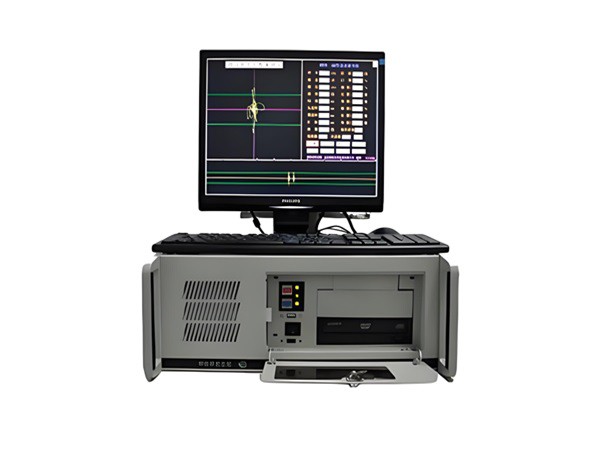
AC - Powered Detectors
When you're working in a fixed location, like a manufacturing plant or a testing laboratory, AC - powered eddy current flaw detectors are a great option. These detectors are usually more powerful than their battery - powered counterparts.
AC - powered detectors need to be plugged into a standard electrical outlet. In most countries, the standard voltage is either 110V or 230V. Our detectors are designed to be compatible with both voltages, so you can use them no matter where you are.
The advantage of AC power is that you have a continuous and stable power supply. This allows the detector to operate at its full capacity for extended periods. You don't have to worry about the battery running out in the middle of a long inspection.
But there are also some downsides. AC - powered detectors are less portable. You're tied to the location of the power outlet, which can be a limitation if you need to move the detector around a large facility.
Power Consumption
The power consumption of an eddy current flaw detector depends on its features and the settings you're using. Detectors with more advanced features, like high - resolution displays and multiple testing frequencies, tend to consume more power.
For example, a basic eddy current flaw detector might consume around 10 - 20 watts of power. On the other hand, a high - end model with all the bells and whistles could consume up to 50 watts or more.
It's important to consider power consumption when choosing a detector, especially if you're using a battery - powered model. You don't want to be constantly recharging the battery or running out of power during an important inspection.
Special Power Requirements for High - Speed Applications
If you're in the market for a high - speed automatic eddy current flaw detector for steel tubes, you'll need to pay special attention to the power source. These detectors are designed to inspect steel tubes at high speeds, which requires a significant amount of power.
The High - Speed Automatic Eddy Current Flaw Detector for Steel Tubes is a great example. It uses advanced technology to quickly and accurately detect flaws in steel tubes. To operate at its full speed and performance, it needs a stable and high - power AC supply.
These high - speed detectors often require a dedicated electrical circuit. The power requirements can be quite high, sometimes up to 1000 watts or more. This is because they need to generate strong electromagnetic fields to detect flaws in the fast - moving steel tubes.
Considerations for Power Sources in Different Environments
When using an eddy current flaw detector, you also need to consider the environment. In industrial settings, there may be electrical interference from other equipment. This can affect the performance of the detector and even damage it if the power supply is not properly protected.
We recommend using a power conditioner or a surge protector to ensure a stable power supply. This can help prevent electrical spikes and fluctuations that could disrupt the operation of the detector.
In outdoor environments, you may need to use a generator if there's no access to a power outlet. Make sure the generator is properly sized to meet the power requirements of the detector. A generator that's too small won't be able to provide enough power, while one that's too large can be wasteful and expensive.
Conclusion
In conclusion, the power source requirement for an eddy current flaw detector depends on several factors, including portability, features, and the application. Battery - powered detectors are great for on - the - go inspections, while AC - powered detectors are better for fixed - location use. High - speed applications, like inspecting steel tubes, require a high - power and stable AC supply.
If you're in the market for an eddy current flaw detector and have questions about the power source requirements, don't hesitate to reach out. We're here to help you choose the right detector for your needs and ensure that you have a reliable power source to keep it running smoothly. Whether you're a small - scale manufacturer or a large industrial facility, we can provide the solutions you need.
References
- Eddy Current Testing Handbook, ASNT (American Society for Nondestructive Testing)
- Principles of Electromagnetic Nondestructive Evaluation, by David A. Jiles