


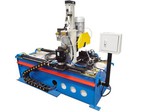
As a supplier of aluminum tube mills, I've been frequently asked whether an aluminum tube mill can be integrated into an automated production line. This question is not only relevant to the efficiency and productivity of manufacturing processes but also to the future of the aluminum tube industry. In this blog, I'll explore the feasibility, benefits, and challenges of integrating an aluminum tube mill into an automated production line.
Feasibility of Integration
The modern aluminum tube mill technology has advanced significantly, making it highly feasible to integrate into an automated production line. Most aluminum tube mills today are equipped with programmable logic controllers (PLCs) and other digital control systems. These systems can communicate with other automated equipment in the production line, such as robotic arms, conveyors, and inspection machines.

For example, the feeding system of an aluminum tube mill can be synchronized with an automated coil loading system. Instead of manual loading, the coils can be automatically transferred from the storage area to the mill, reducing labor - intensive work and potential human errors. The forming and welding processes of the tube mill can also be precisely controlled by the PLC, ensuring consistent quality and high - speed production.
Moreover, the development of Industry 4.0 technologies, such as the Internet of Things (IoT), has further enhanced the integration possibilities. Sensors can be installed on the aluminum tube mill to collect real - time data on parameters like temperature, pressure, and speed. This data can be transmitted to a central control system, which can then adjust the operation of the mill and other equipment in the production line accordingly.
Benefits of Integration
Increased Productivity
One of the most significant benefits of integrating an aluminum tube mill into an automated production line is the increase in productivity. Automated systems can operate 24/7 without breaks, unlike human workers. The continuous operation of the production line can lead to a substantial increase in the number of aluminum tubes produced per day. For instance, an automated line can complete the tube - making process much faster than a semi - automated or manual one, reducing the production cycle time.
Improved Quality
Automation ensures a high level of precision and consistency in the production of aluminum tubes. The automated control systems can maintain the exact specifications of the tube, such as diameter, wall thickness, and length. This results in fewer defective products and higher - quality tubes. In addition, automated inspection systems can quickly detect any defects in the tubes during the production process, allowing for immediate corrective actions.
Cost Savings
Although the initial investment in an automated production line is relatively high, it can lead to long - term cost savings. Labor costs are significantly reduced as fewer workers are required to operate the production line. Additionally, the reduction in defective products means less waste and lower material costs. Energy consumption can also be optimized through automated control, further reducing operational costs.
Enhanced Safety
Automated production lines can improve workplace safety. Workers are less exposed to hazardous conditions, such as high - temperature welding areas and heavy machinery. Robotic arms can perform tasks that are dangerous for humans, such as handling heavy coils and moving finished products.
Challenges of Integration
High Initial Investment
The cost of integrating an aluminum tube mill into an automated production line is substantial. This includes the cost of purchasing the tube mill itself, as well as the cost of other automated equipment, such as conveyors, robotic arms, and inspection systems. There are also costs associated with software development, installation, and training.
Technical Complexity
Integrating different types of equipment into a single automated production line requires a high level of technical expertise. The communication between the tube mill and other equipment needs to be carefully configured to ensure seamless operation. Any technical glitches can disrupt the entire production process, leading to downtime and loss of productivity.
Maintenance and Upgrades
Automated production lines require regular maintenance to ensure optimal performance. The complex electronic and mechanical components of the tube mill and other equipment need to be inspected and serviced regularly. In addition, as technology advances, the production line may need to be upgraded to keep up with the latest industry standards.
Our Solution: Automated Aluminum Tube Making Machine | Customizable Tube Mill Systems
At our company, we offer advanced aluminum tube mills that are designed for easy integration into automated production lines. Our tube mills are equipped with state - of - the - art control systems that can communicate with other automated equipment. We also provide customized solutions to meet the specific needs of our customers.
Our automated aluminum tube making machines are highly efficient and can produce high - quality aluminum tubes with consistent specifications. The machines are designed to be user - friendly, with intuitive control panels that allow operators to easily adjust the production parameters.
We understand the challenges of integrating an aluminum tube mill into an automated production line, and we offer comprehensive support services. Our team of experts can assist with the installation, configuration, and maintenance of the production line. We also provide training to ensure that our customers' operators can effectively operate and manage the automated system.
Conclusion
In conclusion, integrating an aluminum tube mill into an automated production line is not only feasible but also offers numerous benefits, including increased productivity, improved quality, cost savings, and enhanced safety. Although there are challenges such as high initial investment, technical complexity, and maintenance requirements, with the right solutions and support, these challenges can be overcome.
If you are interested in integrating an aluminum tube mill into your automated production line, we invite you to contact us for a detailed consultation. Our team of experts will be happy to discuss your specific needs and provide you with the best solutions.
References
- "Automation in the Manufacturing Industry: A Comprehensive Guide", published by Industry Insights Press.
- "Advanced Aluminum Tube Manufacturing Technologies", by John Smith, published by Metal Manufacturing Journal.