


Hey there! As a supplier of eddy current flaw detectors, I often get asked this question: "Can an eddy current flaw detector detect small flaws?" Well, let's dig into this topic and find out.
First off, let's briefly understand how eddy current flaw detectors work. These nifty devices use the principle of electromagnetic induction. When an alternating current is passed through a coil, it creates a changing magnetic field. When this magnetic field interacts with a conductive material, it induces eddy currents in the material. Any flaws in the material, like cracks or discontinuities, will disrupt these eddy currents, and the detector can pick up these disruptions as changes in the electrical properties of the coil.
Now, to answer the big question - yes, eddy current flaw detectors can indeed detect small flaws. But there are a bunch of factors that come into play and affect their ability to do so.
Factors Affecting the Detection of Small Flaws
1. Flaw Size and Orientation
The size of the flaw matters a great deal. Eddy current flaw detectors are pretty good at detecting flaws that are relatively small compared to the size of the test piece. However, as the flaw gets tinier, it becomes more challenging for the detector to distinguish it from normal variations in the material. Also, the orientation of the flaw is crucial. If a flaw is oriented parallel to the magnetic field lines of the eddy currents, it might be more difficult to detect compared to a flaw that is perpendicular to those lines.
2. Material Properties
The type of material being tested has a significant impact. Different materials have different electrical conductivities and magnetic permeabilities. For example, highly conductive materials like copper and aluminum are generally easier to test with eddy current flaw detectors. On the other hand, materials with low conductivity or complex microstructures can pose more challenges. The presence of impurities or inhomogeneities in the material can also create background noise that might mask small flaws.
3. Coil Design
The design of the eddy current coil is another key factor. There are different types of coils, such as absolute coils and differential coils. Absolute coils are sensitive to the overall electrical properties of the material, while differential coils are better at detecting local variations, like small flaws. The size, shape, and number of turns in the coil can also affect its sensitivity to small flaws. A well - designed coil can enhance the detector's ability to pick up even the tiniest of imperfections.
4. Testing Frequency
The frequency of the alternating current used in the eddy current test is a critical parameter. Higher frequencies are more sensitive to surface and near - surface flaws, while lower frequencies can penetrate deeper into the material. When trying to detect small flaws, the right frequency needs to be selected based on the size and depth of the expected flaws and the properties of the material.
Real - World Applications and Success Stories
In the aerospace industry, eddy current flaw detectors are used to inspect critical components like turbine blades and aircraft wings. These components need to be free of even the smallest flaws to ensure safety. Eddy current testing has been able to detect hair - line cracks in turbine blades, which could have led to catastrophic failures if left undetected.
In the automotive industry, eddy current flaw detectors are used to inspect engine parts, such as crankshafts and camshafts. Small flaws in these parts can lead to premature wear and failure, so early detection is crucial. Our company has supplied eddy current flaw detectors to many automotive manufacturers, and they have reported great success in detecting small flaws in their production lines.
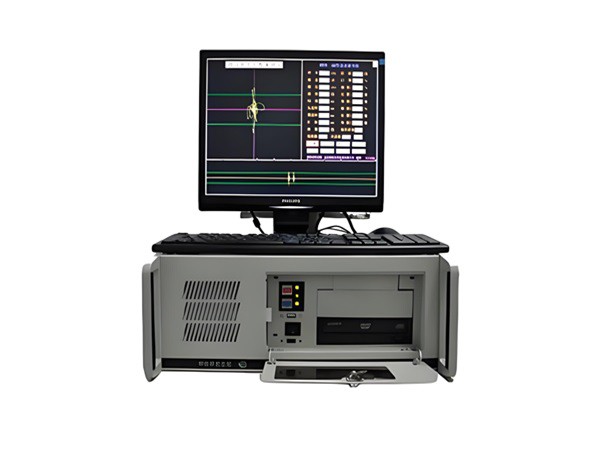
If you're in the business of testing steel tubes, you might be interested in our Steel Tube Eddy Current Flaw Detector. This specialized detector is designed to detect small flaws in steel tubes with high precision, making it a great choice for quality control in the steel tube manufacturing industry.
Limitations and Challenges
While eddy current flaw detectors are powerful tools for detecting small flaws, they do have some limitations. As mentioned earlier, the material properties can be a hindrance. Some materials, like composites, are not as well - suited for eddy current testing because they are not electrically conductive. Also, the presence of surface roughness or coating on the test piece can affect the accuracy of the test.
Another challenge is the interpretation of the test results. Sometimes, the signals from small flaws can be very weak and difficult to distinguish from background noise. Skilled operators are needed to accurately analyze the data and determine whether a small signal is actually a flaw or just a normal variation in the material.
Conclusion
So, to sum it up, an eddy current flaw detector can detect small flaws, but it's not a one - size - fits - all solution. The ability to detect small flaws depends on a variety of factors, including flaw size and orientation, material properties, coil design, and testing frequency. Despite the limitations and challenges, eddy current flaw detectors have proven to be invaluable in many industries for ensuring the quality and safety of critical components.
If you're in the market for an eddy current flaw detector and have questions about its ability to detect small flaws in your specific application, don't hesitate to reach out. We're here to help you find the right solution for your needs. Whether you're in the aerospace, automotive, or any other industry that requires high - precision flaw detection, we've got the expertise and the products to meet your requirements. Let's start a conversation about how we can work together to improve your quality control processes and keep your products safe and reliable.
References
- "Non - Destructive Testing Handbook, Volume 4: Eddy Current Testing"
- Various industry research papers on eddy current flaw detection technology