


In the realm of modern manufacturing, tube laser cutting machines have emerged as a revolutionary force, enabling precise and efficient cutting of various tubes. As a leading supplier of Tube Laser Cutting Machine, we understand the importance of synchronization between tube feeding and cutting. This synchronization is crucial for achieving high-quality cuts, optimizing production efficiency, and reducing waste. In this blog post, we will delve into the mechanisms and technologies that enable a tube laser cutting machine to synchronize tube feeding and cutting effectively.
The Basics of Tube Laser Cutting
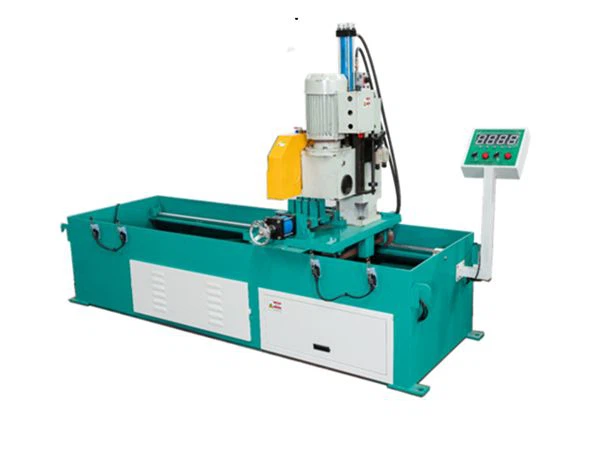
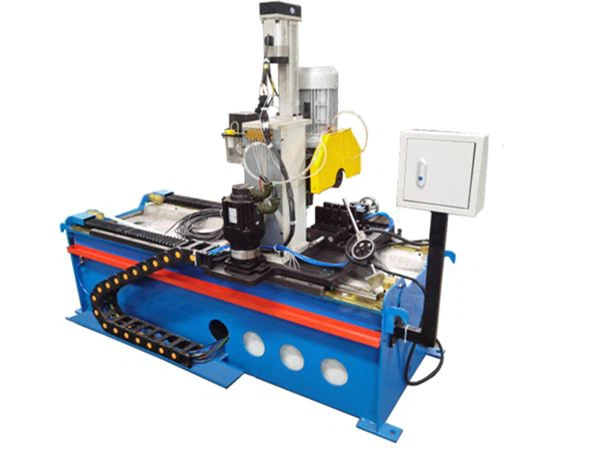
Before we explore the synchronization process, let's briefly review the basic principles of tube laser cutting. A tube laser cutting machine uses a high-powered laser beam to melt or vaporize the material of the tube, creating a precise cut. The laser beam is typically generated by a laser source and directed onto the tube through a series of mirrors and lenses. The tube is held in place by a clamping system and fed through the cutting area by a feeding mechanism.
The Importance of Synchronization
Synchronization between tube feeding and cutting is essential for several reasons. First, it ensures that the laser beam cuts the tube at the correct position and angle, resulting in accurate and consistent cuts. Without proper synchronization, the cuts may be misaligned, leading to defective parts and increased waste. Second, synchronization helps to optimize the cutting speed and efficiency. By coordinating the movement of the tube and the laser beam, the machine can cut the tube at the maximum speed possible without sacrificing quality. Finally, synchronization reduces the wear and tear on the machine components, extending the lifespan of the equipment and reducing maintenance costs.
Mechanisms for Synchronization
There are several mechanisms and technologies that a tube laser cutting machine can use to synchronize tube feeding and cutting. Let's explore some of the most common ones:
Encoder Feedback System
An encoder is a device that measures the position and speed of a rotating or linear object. In a tube laser cutting machine, encoders are used to monitor the movement of the tube and the laser cutting head. The encoder feedback system provides real-time information about the position and speed of the tube, allowing the machine to adjust the cutting parameters accordingly. For example, if the tube is moving too fast, the machine can slow down the laser cutting speed to ensure a clean cut. Conversely, if the tube is moving too slowly, the machine can increase the cutting speed to improve efficiency.
Servo Motors
Servo motors are electric motors that can be precisely controlled to achieve a specific position, speed, or torque. In a tube laser cutting machine, servo motors are used to drive the tube feeding and cutting mechanisms. The servo motors are connected to the encoder feedback system, which provides feedback on the position and speed of the tube. Based on this feedback, the servo motors can adjust the movement of the tube and the laser cutting head to ensure synchronization. Servo motors offer high precision, fast response times, and smooth operation, making them ideal for tube laser cutting applications.
CNC Control System
A CNC (Computer Numerical Control) system is a computerized control system that is used to automate the operation of a machine tool. In a tube laser cutting machine, the CNC control system is responsible for coordinating the movement of the tube and the laser cutting head. The CNC system receives input from the encoder feedback system and the operator's commands, and then generates the appropriate control signals to drive the servo motors. The CNC system can also store and execute pre-programmed cutting patterns, allowing the machine to perform complex cutting operations with high precision and repeatability.
Laser Power Control
In addition to synchronizing the movement of the tube and the laser cutting head, a tube laser cutting machine also needs to control the power of the laser beam. The laser power control system adjusts the intensity of the laser beam based on the thickness and material of the tube. By matching the laser power to the cutting requirements, the machine can achieve clean, precise cuts with minimal heat-affected zone. The laser power control system is also integrated with the CNC control system, allowing for seamless synchronization between tube feeding and cutting.
Advanced Synchronization Technologies
In addition to the basic mechanisms described above, there are also some advanced synchronization technologies that are being used in modern tube laser cutting machines. These technologies offer even higher levels of precision, efficiency, and flexibility.
Real-Time Monitoring and Adaptive Control
Some tube laser cutting machines are equipped with real-time monitoring and adaptive control systems. These systems use sensors to monitor the cutting process in real-time, collecting data on parameters such as cutting speed, laser power, and tube position. Based on this data, the system can automatically adjust the cutting parameters to optimize the cutting process. For example, if the system detects that the tube is warping during the cutting process, it can adjust the laser power and cutting speed to compensate for the deformation.
Intelligent Cutting Algorithms
Intelligent cutting algorithms are another advanced technology that is being used in tube laser cutting machines. These algorithms use artificial intelligence and machine learning techniques to analyze the cutting process and optimize the cutting parameters. The algorithms can take into account factors such as the material properties of the tube, the geometry of the part, and the cutting requirements to determine the optimal cutting strategy. By using intelligent cutting algorithms, the machine can achieve higher cutting speeds, better quality cuts, and reduced waste.
Integration with CAD/CAM Systems
Many tube laser cutting machines are now integrated with CAD/CAM (Computer-Aided Design/Computer-Aided Manufacturing) systems. CAD/CAM systems allow the operator to design the part in a virtual environment and then generate the cutting program automatically. The cutting program can be transferred directly to the tube laser cutting machine, eliminating the need for manual programming and reducing the risk of errors. The integration of CAD/CAM systems also enables the machine to perform complex cutting operations, such as bevel cutting and 3D cutting, with high precision and efficiency.
Conclusion
Synchronization between tube feeding and cutting is a critical factor in the performance of a tube laser cutting machine. By using advanced mechanisms and technologies such as encoder feedback systems, servo motors, CNC control systems, laser power control, real-time monitoring and adaptive control, intelligent cutting algorithms, and integration with CAD/CAM systems, the machine can achieve high levels of precision, efficiency, and flexibility. As a leading supplier of Tube Laser Cutting Machine, we are committed to providing our customers with the latest and most advanced technology in tube laser cutting. If you are interested in learning more about our products or have any questions about tube laser cutting, please contact us for a consultation. We look forward to working with you to meet your manufacturing needs.
References
- "Laser Cutting Technology: Principles and Applications" by John Doe
- "CNC Machining Handbook" by Jane Smith
- "Servo Motors and Drives: Theory, Design, and Application" by Robert Johnson