


In the realm of non - destructive testing (NDT), eddy current flaw detectors have emerged as indispensable tools. As a supplier of eddy current flaw detectors, I've witnessed firsthand the transformative impact these devices have on various industries. In this blog, I'll delve into the numerous advantages of using an eddy current flaw detector.
High Sensitivity and Precision
One of the most significant advantages of eddy current flaw detectors is their high sensitivity. These detectors can detect extremely small flaws, cracks, and discontinuities in conductive materials. Whether it's a hair - thin crack in a metal component or a minute change in material properties, an eddy current flaw detector can pick up these subtle variations.
The principle behind eddy current testing is based on electromagnetic induction. When an alternating current is passed through a coil, it generates a magnetic field. When this coil is placed near a conductive material, eddy currents are induced in the material. Any flaw or change in the material's conductivity or magnetic permeability will disrupt these eddy currents, and the detector can measure these disturbances with great precision. This high level of sensitivity allows for the early detection of defects, which is crucial in preventing catastrophic failures in critical components.
For example, in the aerospace industry, where the safety and reliability of aircraft parts are of utmost importance, eddy current flaw detectors are used to inspect turbine blades, landing gear components, and other critical parts. Detecting a small crack in a turbine blade before it propagates can save lives and prevent costly aircraft downtime.
Non - Contact Testing
Eddy current flaw detectors offer the advantage of non - contact testing. Unlike some other NDT methods that require physical contact with the test object, eddy current testing can be performed without touching the material. This is particularly beneficial when testing delicate or fragile materials, as it eliminates the risk of damage during the inspection process.
In the electronics industry, for instance, the components are often very small and delicate. Eddy current flaw detectors can be used to inspect printed circuit boards (PCBs) and semiconductor chips without making direct contact. This non - contact testing method ensures that the integrity of the components is maintained, and there is no risk of scratching or damaging the sensitive surfaces.
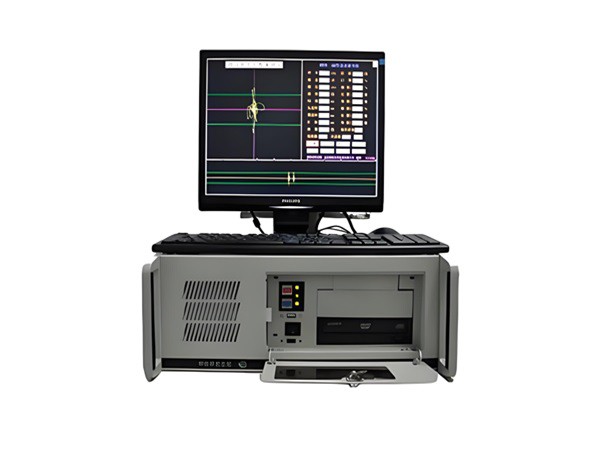
Moreover, non - contact testing allows for high - speed inspections. The detector can be moved quickly over the surface of the material, making it suitable for mass production environments. In a steel tube manufacturing plant, an eddy current flaw detector can be integrated into the production line to continuously inspect the tubes as they are being produced. This High - Speed Automatic Eddy Current Flaw Detector for Steel Tubes can significantly increase the efficiency of the production process by quickly identifying defective tubes.
Fast Inspection Speed
Eddy current flaw detectors are known for their fast inspection speed. The testing process is relatively quick, especially when compared to some other NDT methods. This is because the eddy current detector can scan large areas of the material in a short period.
In the automotive industry, where high - volume production is the norm, eddy current flaw detectors are used to inspect engine components, brake parts, and other critical elements. The ability to quickly inspect these parts on the production line ensures that the manufacturing process is not slowed down. For example, a single eddy current inspection of a brake rotor can be completed in a matter of seconds, allowing for thousands of rotors to be inspected in a day.
The fast inspection speed also makes eddy current testing suitable for on - site inspections. In the construction industry, eddy current flaw detectors can be used to quickly inspect steel structures, such as bridges and buildings, for hidden flaws. This rapid inspection capability enables engineers to make timely decisions about the safety and integrity of the structures.
Versatility
Eddy current flaw detectors are highly versatile and can be used to test a wide range of conductive materials. They can detect flaws in ferrous and non - ferrous metals, including aluminum, copper, stainless steel, and titanium. This versatility makes them suitable for a variety of industries, from manufacturing and aerospace to electronics and power generation.
In addition to detecting flaws, eddy current flaw detectors can also be used for other purposes, such as measuring the thickness of thin conductive coatings, determining the conductivity of materials, and sorting materials based on their properties. For example, in the food packaging industry, eddy current testing can be used to measure the thickness of aluminum foil used in packaging. This helps ensure that the packaging provides adequate protection for the food products.
Portability
Many eddy current flaw detectors are portable, making them easy to use in different locations. Portable models are lightweight and compact, allowing inspectors to carry them to on - site inspections, such as in the field or at remote construction sites.
In the oil and gas industry, where pipelines are often located in remote areas, portable eddy current flaw detectors are used to inspect the pipelines for corrosion and other defects. Inspectors can easily transport the detector to the pipeline site and perform the inspection without the need for complex setup.
Cost - Effectiveness
When considering the overall cost of inspection, eddy current flaw detectors are a cost - effective solution. The initial investment in an eddy current flaw detector may be relatively high, but the long - term benefits outweigh the cost.
The fast inspection speed and high sensitivity of eddy current testing reduce the time and labor required for inspections. In a manufacturing plant, this means that more products can be inspected in less time, increasing productivity. Additionally, the early detection of defects can prevent costly product recalls and production downtime.
The non - contact nature of eddy current testing also reduces the cost associated with sample preparation and potential damage to the test object. There is no need to clean or prepare the surface of the material extensively, and there is no risk of damaging the component during the inspection.
Easy to Use and Train
Eddy current flaw detectors are relatively easy to use, especially when compared to some other NDT methods. Most modern eddy current flaw detectors come with user - friendly interfaces and software that guide the operator through the inspection process.
Training operators to use eddy current flaw detectors is also relatively straightforward. With a few days of training, operators can learn how to set up the detector, perform inspections, and interpret the results. This ease of use and training makes eddy current testing accessible to a wide range of industries and organizations.
Real - Time Results
Eddy current flaw detectors provide real - time results. As soon as the detector scans the material, it can display the presence of flaws or other anomalies on the screen. This allows for immediate decision - making, whether it's to reject a defective product or to perform further analysis.
In a quality control department, real - time results from an eddy current flaw detector enable inspectors to quickly identify and separate defective parts from the good ones. This helps maintain the quality of the products and ensures that only high - quality items are shipped to customers.
In conclusion, the advantages of using an eddy current flaw detector are numerous. From high sensitivity and non - contact testing to fast inspection speed and cost - effectiveness, these detectors offer a comprehensive solution for detecting flaws in conductive materials. If you are in an industry that requires reliable and efficient non - destructive testing, I encourage you to consider using an eddy current flaw detector. Our company offers a wide range of eddy current flaw detectors to meet your specific needs. Contact us today to start a procurement discussion and find the best solution for your inspection requirements.
References
- ASNT (American Society for Nondestructive Testing). "Eddy Current Testing Handbook".
- NDT - ed.org. "Eddy Current Testing Principles and Applications".
- Various industry reports on non - destructive testing methods.