


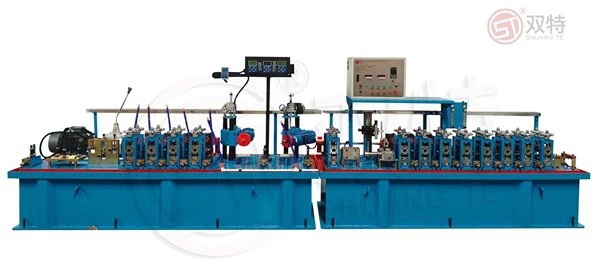
Electrical control components play a pivotal role in the operation of a decorative tube mill. As a reputable supplier of decorative tube mills, I have witnessed firsthand the significance of these components in ensuring efficient, precise, and reliable tube production. In this blog post, I will delve into the various electrical control components of a decorative tube mill, exploring their functions, importance, and how they contribute to the overall performance of the machine.
Programmable Logic Controllers (PLCs)
Programmable Logic Controllers, or PLCs, are the brain of a decorative tube mill. These industrial computers are designed to control and automate complex processes, making them essential for the efficient operation of the mill. PLCs receive input signals from various sensors and switches, process this information according to pre-programmed logic, and then send output signals to control the mill's motors, valves, and other actuators.
One of the key advantages of using PLCs in a decorative tube mill is their flexibility. They can be easily programmed to adapt to different production requirements, such as changing tube diameters, wall thicknesses, and production speeds. This allows manufacturers to quickly adjust their production processes to meet the demands of their customers, increasing productivity and reducing downtime.
In addition to their flexibility, PLCs also offer high reliability and durability. They are designed to operate in harsh industrial environments, withstanding extreme temperatures, humidity, and electrical noise. This ensures that the mill can continue to operate smoothly and efficiently, even under challenging conditions.
Human-Machine Interfaces (HMIs)
Human-Machine Interfaces, or HMIs, provide operators with a user-friendly interface to interact with the decorative tube mill. These interfaces typically consist of touchscreens, buttons, and displays that allow operators to monitor and control the mill's operation in real-time.
HMIs play a crucial role in the operation of a decorative tube mill by providing operators with easy access to important information, such as production status, machine settings, and diagnostic data. This allows operators to quickly identify and address any issues that may arise during the production process, minimizing downtime and ensuring product quality.
In addition to providing operators with access to information, HMIs also allow them to control the mill's operation. Operators can use the HMI to start and stop the mill, adjust the production speed, and change the tube dimensions. This makes it easy for operators to operate the mill efficiently and effectively, even without extensive technical knowledge.

Variable Frequency Drives (VFDs)
Variable Frequency Drives, or VFDs, are used to control the speed of the motors in a decorative tube mill. These drives work by adjusting the frequency and voltage of the electrical power supplied to the motor, allowing the motor to operate at different speeds.
One of the main advantages of using VFDs in a decorative tube mill is their energy efficiency. By adjusting the motor speed to match the production requirements, VFDs can significantly reduce the energy consumption of the mill. This not only helps to lower operating costs but also reduces the environmental impact of the production process.
In addition to their energy efficiency, VFDs also offer precise control over the motor speed. This allows for more accurate and consistent tube production, resulting in higher quality products. VFDs can also help to extend the lifespan of the motors by reducing the stress and wear on the motor components.
Sensors and Switches
Sensors and switches are used to monitor the operation of the decorative tube mill and provide feedback to the PLCs and HMIs. These components play a crucial role in ensuring the safety, efficiency, and quality of the production process.
There are many different types of sensors and switches used in a decorative tube mill, including proximity sensors, photoelectric sensors, limit switches, and pressure sensors. Proximity sensors are used to detect the presence or absence of objects, such as tubes or coils of metal. Photoelectric sensors are used to detect the position and movement of objects, while limit switches are used to control the movement of the mill's mechanical components. Pressure sensors are used to monitor the hydraulic and pneumatic systems in the mill, ensuring that they are operating within the specified parameters.
By providing real-time feedback on the operation of the mill, sensors and switches allow the PLCs to make adjustments to the production process as needed. This helps to ensure that the mill is operating efficiently and effectively, while also minimizing the risk of accidents and equipment damage.
Relays and Contactors
Relays and contactors are used to control the flow of electrical power in a decorative tube mill. These components are essential for protecting the electrical components of the mill from damage and ensuring the safety of the operators.
Relays are small electrical switches that are used to control the flow of electrical power in low-power circuits. They are typically used to control the operation of sensors, switches, and other low-power devices. Contactors, on the other hand, are larger electrical switches that are used to control the flow of electrical power in high-power circuits. They are typically used to control the operation of motors, heaters, and other high-power devices.
By using relays and contactors, the electrical control system of the decorative tube mill can be designed to safely and efficiently control the flow of electrical power. This helps to ensure that the mill can operate reliably and safely, even under heavy loads.
Conclusion
In conclusion, the electrical control components of a decorative tube mill are essential for ensuring its efficient, precise, and reliable operation. Programmable Logic Controllers, Human-Machine Interfaces, Variable Frequency Drives, Sensors and Switches, and Relays and Contactors all play crucial roles in the production process. By understanding the functions and importance of these components, manufacturers can optimize the performance of their decorative tube mills, increase productivity, and reduce operating costs.
If you are in the market for a high-quality decorative tube mill, I encourage you to explore our range of products, including the Stainless Steel Furniture Tube Mill, Public Facility Stainless Steel Tube Mill | Tube Making Machine for Urban Infrastructure, and Industrial-Grade Stainless Steel Construction Tube Mill Machine Manufacturer. Our tube mills are equipped with advanced electrical control components to ensure the highest level of performance and reliability.
We invite you to contact us to discuss your specific requirements and explore how our decorative tube mills can meet your production needs. Our team of experts is ready to provide you with detailed information and support to help you make an informed decision.
References
- "Electrical Control Systems for Industrial Automation." Siemens AG.
- "Programmable Logic Controllers: Principles and Applications." John W. Mitchell.
- "Variable Frequency Drives: Basics, Maintenance, and Troubleshooting." Timothy F. Heward.