



Hey there! As a supplier of eddy current flaw detectors, I often get asked about the detection speed of these nifty devices. So, I thought I'd take a deep dive into this topic and share some insights with you.
First off, let's quickly recap what an eddy current flaw detector is. It's a non - destructive testing tool that uses electromagnetic induction to detect flaws in conductive materials. These flaws can include cracks, corrosion, and other discontinuities. Eddy current flaw detectors are widely used in industries like aerospace, automotive, and manufacturing, where the integrity of materials is crucial.
Now, onto the big question: what is the detection speed of an eddy current flaw detector? Well, the answer isn't as straightforward as you might think. There are several factors that can influence the detection speed, and I'll break them down for you.
Factors Affecting Detection Speed
1. Material Properties
The type of material being tested plays a huge role in determining the detection speed. Different materials have different electrical conductivities and magnetic permeabilities. For example, materials with high electrical conductivity, like copper and aluminum, allow eddy currents to flow more easily. This means that the flaw detector can generate and detect eddy currents faster, resulting in a higher detection speed. On the other hand, materials with low conductivity or high magnetic permeability, such as some types of stainless steel, may slow down the detection process.
2. Flaw Size and Type
The size and type of flaws you're trying to detect also matter. Smaller flaws are generally more difficult to detect, and the detector may need to take more time to analyze the eddy current signals to accurately identify them. Similarly, certain types of flaws, like subsurface cracks, may require more complex signal processing, which can slow down the detection speed. For instance, surface cracks are usually easier and quicker to detect compared to deep - seated internal flaws.
3. Detector Design and Technology
The design and technology of the eddy current flaw detector itself are significant factors. Modern detectors are equipped with advanced signal processing algorithms and high - speed data acquisition systems. These features allow them to analyze eddy current signals much faster than older models. For example, some high - end detectors can process thousands of data points per second, enabling rapid flaw detection. Additionally, the design of the probe, which is the part of the detector that comes into contact with the material, can also affect the speed. A well - designed probe can efficiently couple the electromagnetic field into the material, reducing the time needed for signal generation and detection.
4. Testing Environment
The testing environment can have an impact on the detection speed. Factors such as temperature, humidity, and the presence of electromagnetic interference can all affect the performance of the eddy current flaw detector. Extreme temperatures can change the electrical properties of the material being tested, which may require the detector to adjust its settings and take more time to obtain accurate results. Similarly, electromagnetic interference from nearby equipment can distort the eddy current signals, forcing the detector to perform additional signal filtering and processing.
Typical Detection Speeds
Under ideal conditions, a standard eddy current flaw detector can achieve detection speeds ranging from a few millimeters per second to several meters per second. For simple surface flaw detection on materials with good electrical conductivity, speeds of up to 1 - 2 meters per second are possible. However, when detecting small or complex flaws, especially in materials with challenging properties, the speed may drop to a few millimeters per second.
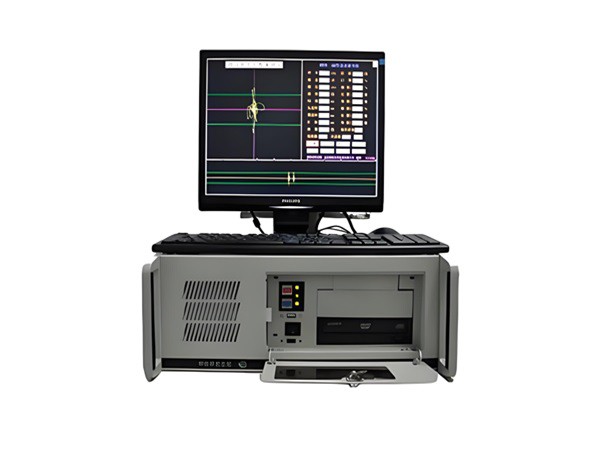
For example, in the inspection of steel tubes, which is a common application, the detection speed can vary widely. A High - Speed Automatic Eddy Current Flaw Detector for Steel Tubes can be used to achieve relatively high speeds. In a high - volume production environment, these detectors can inspect steel tubes at speeds of up to 3 - 5 meters per second, depending on the tube diameter, wall thickness, and the required level of flaw sensitivity.
Importance of Detection Speed
You might be wondering why detection speed is so important. Well, in industrial applications, time is money. Faster detection speeds mean that more parts can be inspected in a shorter period, increasing productivity. This is especially crucial in high - volume manufacturing processes, where any delay in the inspection stage can cause bottlenecks in the production line.
Moreover, in industries where safety is a top priority, such as aerospace and automotive, rapid flaw detection can help ensure that components meet the required quality standards in a timely manner. This reduces the risk of faulty parts being used in critical applications, which could have serious consequences.
Balancing Speed and Accuracy
While high detection speed is desirable, it's important to strike a balance between speed and accuracy. Pushing the detector to its maximum speed may result in false positives or false negatives. False positives occur when the detector incorrectly identifies a flaw, while false negatives happen when it fails to detect an actual flaw. To ensure reliable results, it's necessary to optimize the detection parameters based on the specific application and material being tested.
This often involves conducting calibration tests to determine the optimal speed for a given level of accuracy. By adjusting factors such as the probe frequency, gain, and filtering settings, it's possible to achieve a good balance between speed and accuracy.
How We Can Help
As a supplier of eddy current flaw detectors, we understand the importance of finding the right balance between detection speed and accuracy for your specific needs. We offer a wide range of detectors with different features and capabilities to suit various applications. Whether you're in the aerospace, automotive, or manufacturing industry, we have a solution that can meet your requirements.
Our team of experts can work with you to select the most appropriate detector and configure it for optimal performance. We also provide training and support to ensure that you can use the detector effectively and get the best results. If you're interested in learning more about our eddy current flaw detectors or have any questions about detection speed, don't hesitate to reach out to us. We're here to help you make an informed decision and improve your inspection processes.
References
- ASNT (American Society for Nondestructive Testing). "Eddy Current Testing Handbook".
- ISO standards related to eddy current testing.
- Technical literature from leading eddy current flaw detector manufacturers.