


In the realm of non - destructive testing (NDT), eddy current flaw detectors stand as indispensable tools for detecting surface and near - surface flaws in conductive materials. As a leading supplier of eddy current flaw detectors, I've witnessed firsthand the crucial role that filters play in these devices. In this blog, I'll delve into the significance of filters in an eddy current flaw detector, exploring how they enhance the performance and reliability of the testing process.
Understanding Eddy Current Testing Basics
Before we dive into the role of filters, it's essential to have a basic understanding of how eddy current testing works. Eddy current testing is based on the principle of electromagnetic induction. When an alternating current is passed through a coil, it generates a magnetic field. When this coil is brought close to a conductive material, the magnetic field induces eddy currents in the material. Any changes in the material, such as cracks, inclusions, or variations in conductivity, will cause disturbances in the eddy currents. These disturbances are then detected by the coil and converted into electrical signals that can be analyzed to identify flaws.
However, the signals received by the eddy current flaw detector are often complex and contain a lot of noise. Noise can come from various sources, including electromagnetic interference, material inhomogeneities, and variations in the test setup. This is where filters come into play.
Types of Filters in Eddy Current Flaw Detectors
There are several types of filters commonly used in eddy current flaw detectors, each with its own specific function and application.
Low - Pass Filters
Low - pass filters are designed to allow low - frequency signals to pass through while attenuating high - frequency signals. In eddy current testing, low - frequency signals are often associated with the desired flaw information, while high - frequency signals are more likely to be noise. By using a low - pass filter, we can reduce the high - frequency noise in the signal, making it easier to identify the flaws. For example, when testing a thick conductive material, the flaw - related signals may have a relatively low frequency. A low - pass filter can help to isolate these signals from the high - frequency noise caused by surface roughness or electromagnetic interference.
High - Pass Filters
Conversely, high - pass filters allow high - frequency signals to pass through and block low - frequency signals. High - frequency signals can be useful for detecting small, shallow flaws near the surface of the material. In some cases, low - frequency signals may be dominated by background noise or material variations that are not related to the flaws we are trying to detect. A high - pass filter can be used to remove these low - frequency components and enhance the visibility of the high - frequency flaw signals.
Band - Pass Filters
Band - pass filters are a combination of low - pass and high - pass filters. They allow a specific range of frequencies, known as the passband, to pass through while attenuating frequencies outside this range. Band - pass filters are very useful in eddy current testing because they can be tuned to the frequency range where the flaw signals are expected to occur. This helps to maximize the signal - to - noise ratio and improve the accuracy of flaw detection. For example, if we know that the flaw signals in a particular material and testing scenario are likely to be in the frequency range of 10 kHz to 100 kHz, we can set the band - pass filter to this range to isolate the relevant signals.
Notch Filters
Notch filters are used to remove a specific frequency or a narrow range of frequencies from the signal. They are particularly useful for eliminating interference from a known source, such as a power line frequency (e.g., 50 Hz or 60 Hz). If the eddy current flaw detector is being used in an environment with strong electromagnetic interference at a specific frequency, a notch filter can be applied to remove this interference and improve the quality of the test signal.
Benefits of Using Filters in Eddy Current Flaw Detectors
The use of filters in eddy current flaw detectors offers several significant benefits.
Improved Signal - to - Noise Ratio
One of the primary benefits of using filters is the improvement of the signal - to - noise ratio. By removing unwanted noise from the signal, filters make it easier to distinguish the flaw - related signals from the background noise. This leads to more accurate and reliable flaw detection. A higher signal - to - noise ratio means that smaller flaws can be detected, and the probability of false positives and false negatives is reduced.
Enhanced Flaw Detection Sensitivity
Filters can also enhance the sensitivity of the eddy current flaw detector. By isolating the relevant frequency components of the flaw signals, filters can amplify the signals related to the flaws while reducing the interference. This allows the detector to detect smaller and more subtle flaws that might otherwise be missed. For example, in the inspection of aerospace components, where the detection of small cracks is critical for safety, the use of appropriate filters can significantly improve the detection sensitivity.
Reduced False Alarms
False alarms can be a major problem in eddy current testing, as they can lead to unnecessary re - testing and delays in the inspection process. Filters help to reduce false alarms by removing the noise and interference that can cause the detector to generate false signals. By focusing on the frequency range where the flaw signals are expected, filters can ensure that only genuine flaw signals are detected, improving the efficiency and reliability of the testing process.
Adaptability to Different Testing Conditions
Different materials and testing scenarios may require different filter settings. Eddy current flaw detectors with adjustable filters offer the flexibility to adapt to a wide range of testing conditions. For example, when testing a thin sheet of metal, a high - pass filter may be more appropriate to detect surface flaws. On the other hand, when testing a thick block of metal, a low - pass or band - pass filter may be needed to detect deeper flaws. As a supplier, we provide our customers with detailed guidance on how to select and adjust the filters based on their specific testing requirements.
Practical Applications of Filters in Eddy Current Flaw Detectors
Filters are widely used in various industries where eddy current testing is employed.
Aerospace Industry
In the aerospace industry, the safety and reliability of components are of utmost importance. Eddy current flaw detectors with advanced filters are used to inspect critical components such as turbine blades, aircraft wings, and landing gear. These components are often made of high - strength alloys, and the detection of small cracks or defects is essential to prevent catastrophic failures. Filters help to ensure that the flaw detection process is accurate and reliable, even in the presence of complex electromagnetic environments.
Automotive Industry
The automotive industry also relies heavily on eddy current testing for quality control. Components such as engine parts, transmission shafts, and brake discs are inspected using eddy current flaw detectors. Filters are used to improve the detection of surface and near - surface flaws, ensuring the durability and safety of the vehicles. For example, in the production of engine blocks, filters can help to detect casting defects or cracks that could lead to engine failure.
Oil and Gas Industry
In the oil and gas industry, eddy current testing is used to inspect pipelines, storage tanks, and other equipment. These components are exposed to harsh environments and are subject to corrosion and stress - related cracking. Filters in eddy current flaw detectors help to distinguish between the signals caused by flaws and the noise generated by the inhomogeneous nature of the materials or the external electromagnetic interference. This allows for the early detection of flaws and the prevention of costly leaks and accidents.
Conclusion
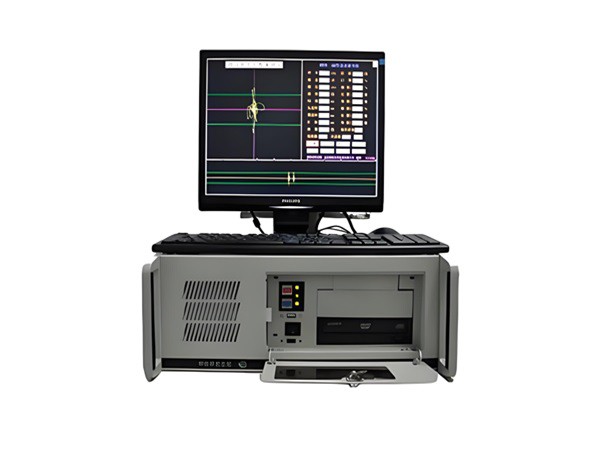
Filters play a vital role in eddy current flaw detectors. They are essential for improving the signal - to - noise ratio, enhancing flaw detection sensitivity, reducing false alarms, and adapting to different testing conditions. As a supplier of eddy current flaw detectors, we are committed to providing our customers with high - quality products that incorporate the latest filter technology. Our High - Speed Automatic Eddy Current Flaw Detector for Steel Tubes is a prime example of our dedication to delivering reliable and efficient testing solutions.
If you are in need of an eddy current flaw detector for your specific application, we invite you to contact us for a detailed discussion. Our team of experts will be happy to assist you in selecting the right equipment and filter settings to meet your requirements. We look forward to working with you to ensure the quality and safety of your products through accurate and reliable non - destructive testing.
References
- Beck, A. H. (2017). Non - Destructive Testing: A Training Guide. CRC Press.
- Blitz, J., & Simpson, F. W. (1968). Principles of Eddy - Current Testing. Edward Arnold.
- McMaster, R. C. (1996). Practical Nondestructive Evaluation and Health Monitoring of Structural Materials. CRC Press.