


As a seasoned supplier of tube polishing machines, I often encounter inquiries from clients about the speed adjustment range of these machines. Understanding this range is crucial as it directly impacts the polishing quality, efficiency, and the type of tubes that can be effectively processed. In this blog, I'll delve into the details of the speed adjustment range of tube polishing machines, exploring its significance, factors affecting it, and typical ranges for different types of tube polishing machines.
The Significance of Speed Adjustment Range
The speed adjustment range of a tube polishing machine is of paramount importance for several reasons. Firstly, different types of tubes require different polishing speeds. For instance, softer materials like aluminum may require a lower speed to prevent over - heating and surface damage, while harder materials such as stainless steel can withstand higher speeds for more efficient material removal.
Secondly, the desired finish of the tube also dictates the appropriate polishing speed. A high - gloss finish may require a slower, more controlled speed to ensure a smooth and even surface, while a rougher finish can be achieved at a higher speed.
Lastly, the diameter and wall thickness of the tube play a role. Smaller diameter tubes may need a higher speed to achieve the same amount of surface contact as larger diameter tubes, and tubes with thicker walls can generally handle higher speeds without deformation.
Factors Affecting the Speed Adjustment Range
Several factors influence the speed adjustment range of a tube polishing machine.
Motor Power: The power of the motor is a primary determinant. A more powerful motor can support a wider speed range and higher maximum speeds. Higher - power motors are capable of driving the polishing wheels or belts at greater velocities, which is essential for processing large - diameter or hard - to - polish tubes.
Polishing Medium: The type of polishing medium used, such as abrasive belts or polishing wheels, also affects the speed range. Different polishing media have different optimal operating speeds. For example, a fine - grit abrasive belt may require a lower speed to avoid excessive wear and tear, while a coarse - grit belt can operate at a higher speed for initial material removal.
Machine Design and Build Quality: The overall design and build quality of the tube polishing machine play a crucial role. A well - designed machine with high - quality components can handle a wider speed range more smoothly and reliably. It can also better withstand the vibrations and forces generated at higher speeds, ensuring stable operation and consistent polishing results.
Typical Speed Adjustment Ranges for Different Types of Tube Polishing Machines
Square Tube Polishing Machine
A Square Tube Polishing Machine typically has a speed adjustment range that can vary depending on its size and power. Smaller, less powerful machines may have a speed range starting from around 500 RPM (Revolutions Per Minute) and going up to 2000 RPM. These machines are suitable for small - scale production or for polishing thinner - walled square tubes.
Larger, industrial - grade square tube polishing machines can have a much wider speed range. They may start at around 300 RPM and reach up to 3000 RPM or even higher. The lower end of the range is useful for delicate polishing operations or for tubes made of softer materials, while the higher end is ideal for high - speed material removal and for processing thicker - walled square tubes.
Round Tube Polishing Machine
Round Tube Polishing Machine also exhibit a diverse speed adjustment range. Compact round tube polishing machines, often used in workshops or small factories, may have a speed range from 800 RPM to 2500 RPM. This range allows for a good balance between precision polishing and reasonable processing speed.
Industrial - scale round tube polishing machines, on the other hand, can offer a speed range from as low as 200 RPM to over 3500 RPM. The ability to operate at such a low speed is beneficial for achieving a mirror - like finish on high - value round tubes, while the high - speed capabilities enable rapid processing of large - volume orders.
How to Choose the Right Speed for Your Tube Polishing Needs
Selecting the appropriate speed for tube polishing is a critical step in achieving the desired results. Here are some guidelines to help you make the right choice:
Understand Your Tube Material: As mentioned earlier, different materials have different optimal polishing speeds. Research the recommended speed range for the specific material of your tubes, whether it's aluminum, stainless steel, copper, or other metals.
Consider the Tube Dimensions: The diameter and wall thickness of the tube are important factors. Larger diameter and thicker - walled tubes can generally handle higher speeds, while smaller and thinner tubes require lower speeds to prevent damage.
Determine the Desired Finish: If you're aiming for a high - gloss finish, start with a lower speed and gradually increase it if necessary. For a rougher, more textured finish, a higher speed may be appropriate.
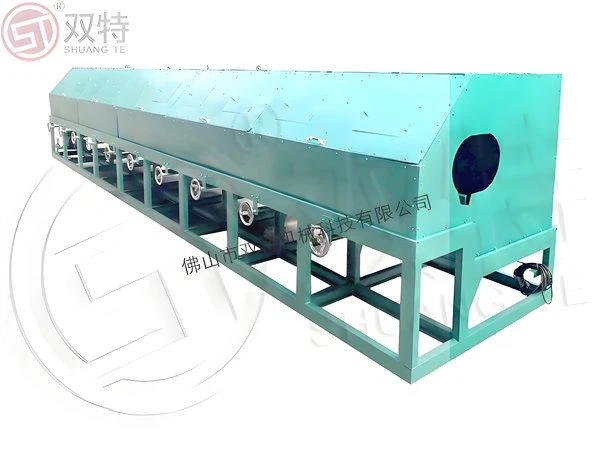

Test and Adjust: It's always a good idea to conduct test runs on a sample tube. Start at a moderate speed and observe the polishing results. If the finish is not satisfactory, adjust the speed accordingly and repeat the test until you achieve the desired outcome.
Conclusion
The speed adjustment range of a tube polishing machine is a critical aspect that can significantly impact the quality and efficiency of the polishing process. As a supplier, I understand the importance of providing machines with a wide and precise speed adjustment range to meet the diverse needs of our clients. Whether you're looking for a Square Tube Polishing Machine or a Round Tube Polishing Machine, our machines are designed to offer optimal speed control for various tube materials, sizes, and finishing requirements.
If you're in the market for a tube polishing machine and have questions about the speed adjustment range or any other features, I encourage you to reach out to us. Our team of experts is ready to assist you in selecting the right machine for your specific needs and to guide you through the procurement process. Contact us today to start a discussion about your tube polishing requirements.
References
- "Handbook of Tube and Pipe Manufacturing Processes" by John N. Huddleston
- "Metal Finishing Guidebook" by Eugene Mallory