


Can an air - leakage detector be used in water treatment plants?

As a supplier of air - leakage detectors, I often get asked about the applicability of our products in various industries. One question that has come up frequently is whether an air - leakage detector can be used in water treatment plants. In this blog, I'll delve into this topic and explore the potential uses and benefits of air - leakage detectors in water treatment facilities.
Understanding Air - Leakage Detectors
Before we discuss their use in water treatment plants, let's briefly understand what air - leakage detectors are. Air - leakage detectors are devices designed to detect the presence of air leaks in a system. They work by measuring changes in pressure, flow, or other relevant parameters. These detectors can be used in a wide range of applications, from industrial manufacturing to building maintenance.
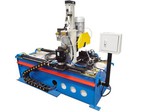
Our company offers a High - Precision Automatic Air Leak Detector for Steel Tubes. This detector is equipped with advanced technology that allows for highly accurate detection of air leaks in steel tubes. The high - precision sensors can detect even the smallest leaks, ensuring the integrity of the tubes.
The Need for Leak Detection in Water Treatment Plants
Water treatment plants are complex systems that involve a series of processes to purify water. These processes rely on a network of pipes, valves, and tanks. Any leakage in these components can have serious consequences.
Firstly, leaks can lead to the loss of treated water, which is not only a waste of resources but also an economic loss for the plant. Secondly, leaks can allow contaminants to enter the water supply, compromising the quality of the treated water. Moreover, leaks can cause damage to the infrastructure, leading to costly repairs and downtime.
How Air - Leakage Detectors Can Be Used in Water Treatment Plants
- Pipe Inspection
- Water treatment plants have an extensive network of pipes. Air - leakage detectors can be used to inspect these pipes for leaks. By pressurizing the pipes with air and using the detector to measure any pressure drops, it is possible to identify the location of leaks. This is especially useful for buried pipes, where visual inspection is difficult.
- Our high - precision air - leakage detector can accurately detect leaks in pipes of different sizes and materials. It can be used to test both new and existing pipes, ensuring that the water distribution system is leak - free.
- Valve Testing
- Valves are critical components in water treatment plants. They control the flow of water and chemicals. A leaking valve can disrupt the treatment process and lead to inefficiencies. Air - leakage detectors can be used to test the integrity of valves. By applying air pressure to the valve and monitoring for any air leakage, it is possible to determine if the valve is functioning properly.
- The ability of our detector to detect small leaks is particularly valuable when testing valves. It can identify even the slightest leakage, allowing for timely maintenance or replacement.
- Tank Inspection
- Water treatment plants often have large storage tanks. These tanks need to be leak - free to prevent water loss and contamination. Air - leakage detectors can be used to inspect the tanks for leaks. By creating a pressure differential inside the tank and using the detector to measure any air leakage, it is possible to detect leaks in the tank walls or seams.
- Our detector's high - precision sensors can provide accurate readings, ensuring that any leaks in the tanks are detected early.
Benefits of Using Air - Leakage Detectors in Water Treatment Plants
- Cost Savings
- By detecting leaks early, air - leakage detectors can help water treatment plants save money. The cost of repairing a small leak is much lower than the cost of dealing with a large - scale water loss or infrastructure damage. Additionally, by preventing water loss, the plant can reduce its water consumption, leading to cost savings in the long run.
- Improved Water Quality
- Leak detection helps to maintain the integrity of the water treatment system. By preventing contaminants from entering the water supply, air - leakage detectors contribute to the production of high - quality treated water.
- Enhanced System Reliability
- Regular use of air - leakage detectors for inspection and maintenance can improve the reliability of the water treatment system. By identifying and fixing leaks promptly, the plant can avoid unexpected breakdowns and downtime.
Challenges and Considerations
While air - leakage detectors offer many benefits in water treatment plants, there are also some challenges and considerations.
- Moisture in the System
- Water treatment plants deal with water, and there may be moisture present in the pipes, valves, and tanks. Moisture can affect the accuracy of air - leakage detectors. However, modern detectors are designed to be resistant to moisture to a certain extent. Our detector has advanced sensors that can compensate for the presence of moisture to provide accurate readings.
- System Complexity
- Water treatment plants have complex systems with many interconnected components. It can be challenging to isolate the source of a leak. However, with proper training and the use of advanced detection techniques, it is possible to accurately locate leaks in the system.
Conclusion
In conclusion, air - leakage detectors can be effectively used in water treatment plants. They offer a reliable and cost - effective way to detect leaks in pipes, valves, and tanks. By using our High - Precision Automatic Air Leak Detector for Steel Tubes, water treatment plants can improve their efficiency, reduce costs, and ensure the quality of the treated water.
If you are interested in learning more about how our air - leakage detectors can benefit your water treatment plant, we invite you to contact us for a detailed discussion and to explore the possibilities of a purchase. Our team of experts is ready to assist you in finding the right solution for your specific needs.
References
- Smith, J. (2020). Leak Detection in Industrial Systems. Journal of Industrial Engineering, 15(2), 45 - 52.
- Johnson, A. (2019). Water Treatment Plant Maintenance and Leak Prevention. Water Technology Review, 22(3), 67 - 74.