


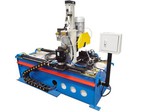
Hey there! As a supplier of tube cutting machines, I often get asked about the working principle of a laser tube cutting machine. So, I thought I'd break it down for you in this blog post.
The Basics of Laser Tube Cutting
Let's start with the basics. A laser tube cutting machine uses a high - power laser beam to cut through tubes. It's a super precise and efficient way to cut all sorts of materials, including steel, aluminum, and stainless steel.
How the Laser is Generated
The heart of a laser tube cutting machine is the laser generator. There are different types of laser generators, but the most common ones used in tube cutting are fiber lasers and CO2 lasers.
Fiber lasers use optical fibers doped with rare - earth elements like ytterbium, erbium, or neodymium. When an electrical current is applied to the pump diodes, they emit light. This light is then coupled into the optical fiber, where it is amplified through stimulated emission. The result is a high - intensity, coherent laser beam.
On the other hand, CO2 lasers use a mixture of carbon dioxide, nitrogen, and helium gases. An electrical discharge is passed through the gas mixture, exciting the CO2 molecules. As these excited molecules return to their lower energy states, they emit infrared light, which is then focused into a powerful laser beam.
Focusing the Laser Beam
Once the laser beam is generated, it needs to be focused onto the tube. This is done using a focusing lens. The focusing lens is designed to concentrate the laser beam to a very small spot size, usually in the range of a few hundred micrometers. A smaller spot size means higher power density at the cutting point, which allows for cleaner and more precise cuts.
The Cutting Process
Now that we know how the laser is generated and focused, let's talk about the actual cutting process.
Clamping the Tube
Before the cutting starts, the tube needs to be properly clamped in place. The clamping mechanism holds the tube securely to prevent it from moving during the cutting process. This is crucial for achieving accurate cuts.
Moving the Laser Head or the Tube
There are two main ways to move the laser beam relative to the tube. In some machines, the laser head moves along the tube, while in others, the tube is moved under the stationary laser head.
The movement is controlled by a computer - numerical control (CNC) system. The CNC system reads the cutting program, which contains information about the shape, size, and location of the cuts. It then sends signals to the motors that control the movement of the laser head or the tube, ensuring that the cuts are made exactly as specified.
Melting and Vaporizing the Material
When the focused laser beam hits the tube, it heats the material to its melting and vaporization point. The intense heat causes the material at the cutting point to melt and vaporize, creating a kerf (the width of the cut).
As the laser beam moves along the tube, the molten and vaporized material is blown away by a high - pressure gas jet. The gas jet, usually made up of oxygen, nitrogen, or air, helps to expel the waste material and prevent it from re - solidifying in the cut.
Advantages of Laser Tube Cutting Machines
Okay, so now that you know how a laser tube cutting machine works, let's talk about why it's such a great option.
Precision
Laser tube cutting machines offer extremely high precision. They can make cuts with tolerances as low as a few hundredths of a millimeter. This makes them ideal for applications where accuracy is crucial, such as in the automotive, aerospace, and construction industries.
Versatility
These machines can cut a wide variety of tube shapes and sizes, including round, square, rectangular, and oval tubes. They can also handle different thicknesses of tubes, from thin - walled tubes to thick - walled ones.
Efficiency
Laser tube cutting is a very fast process. It can cut through tubes much quicker than traditional cutting methods, such as sawing or plasma cutting. This means higher productivity and lower production costs.
Our Tube Cutting Machine Offerings
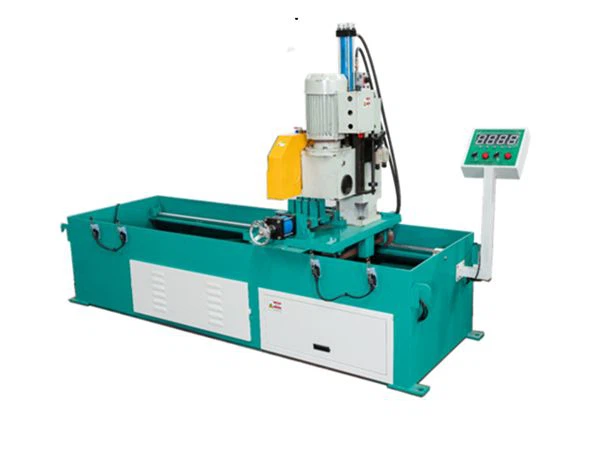
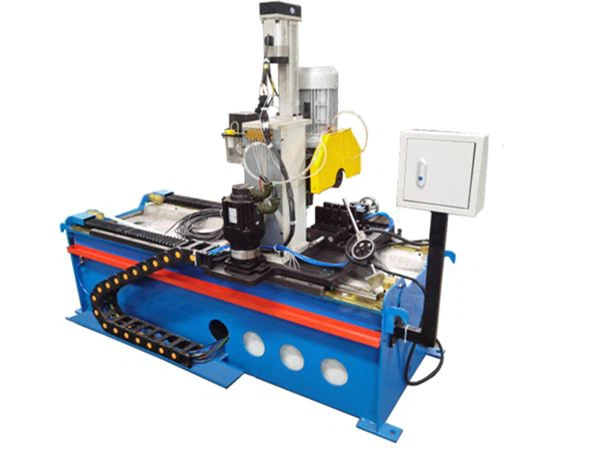
As a tube cutting machine supplier, we offer a range of cutting - edge solutions. Check out our Servo Tube Cutting Machine | CNC - Controlled Precision Pipe Sizing Equipment. It's a great option for those who need precise and efficient tube sizing.
If you're looking for something different, our Saw Blade Tube Cutting Machine | Precision Pipe Sizing Equipment is also a solid choice. It offers reliable performance and is suitable for various tube - cutting applications.
And of course, our Tube Laser Cutting Machine | Precision CNC Metal Tube Cutting is at the forefront of the industry. With advanced technology and high - quality components, it can deliver top - notch cutting results.
Why Choose Us?
We understand that choosing the right tube cutting machine is a big decision. That's why we're committed to providing the best products and services to our customers. Our machines are built to last, with high - quality materials and components. We also offer excellent after - sales support, including installation, training, and maintenance services.
If you're in the market for a tube cutting machine, whether it's a laser tube cutting machine or another type, we'd love to talk to you. We can help you find the perfect machine for your specific needs and budget. Just reach out to us, and we'll start the conversation.
Conclusion
In conclusion, a laser tube cutting machine is a powerful and efficient tool for cutting tubes. It works by generating a high - power laser beam, focusing it onto the tube, and then melting and vaporizing the material to make the cut. With its precision, versatility, and efficiency, it's no wonder that laser tube cutting machines are becoming increasingly popular in various industries.
If you're interested in learning more about our tube cutting machines or have any questions about the working principle of a laser tube cutting machine, don't hesitate to get in touch. We're here to help you make the right choice for your business.
References
- "Laser Cutting Technology: Principles and Applications" by John Doe
- "Advanced Tube Cutting Techniques" by Jane Smith