


Can an eddy current flaw detector be used for building material inspection?
As a supplier of eddy current flaw detectors, I often encounter inquiries about the applicability of our products in various industries, especially in building material inspection. Eddy current flaw detection is a non - destructive testing (NDT) method that has been widely used in the manufacturing and quality control of metal components. But can it be effectively used for building materials? Let's explore this topic in detail.
How Eddy Current Flaw Detectors Work
Before delving into the application in building material inspection, it's essential to understand the basic principle of eddy current flaw detectors. Eddy current testing is based on the electromagnetic induction phenomenon. When an alternating current is passed through a coil, it generates an alternating magnetic field. When this coil is brought close to a conductive material, eddy currents are induced in the material. Any flaws, such as cracks, inclusions, or changes in material properties, will disrupt the flow of these eddy currents. The disruption is then detected by the coil as a change in impedance, which can be analyzed to identify the presence and characteristics of the flaw.
Building Materials and Their Suitability for Eddy Current Testing
Building materials are diverse, including metals, concrete, wood, and plastics. Eddy current flaw detectors are most suitable for conductive materials, primarily metals.
Metals in Building Construction
Metals are commonly used in building construction for structural components, such as steel beams, columns, and reinforcement bars. Eddy current flaw detectors can be extremely useful in inspecting these metal building materials. For example, steel reinforcement bars, also known as rebars, are crucial for the structural integrity of concrete structures. Cracks or defects in rebars can significantly reduce the strength and durability of the building. An eddy current flaw detector can quickly and accurately detect surface and near - surface flaws in rebars without causing any damage to the material.
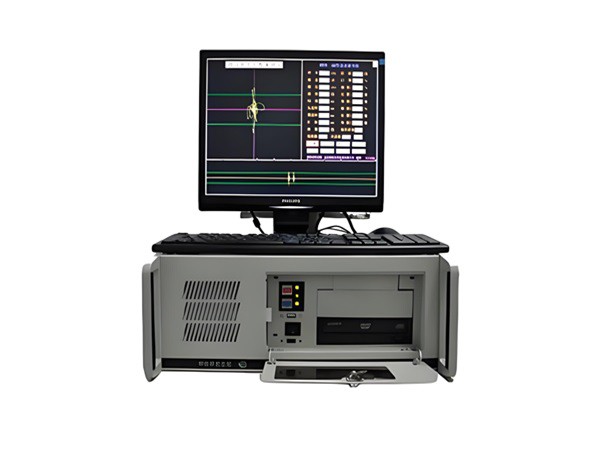
In addition, steel tubes are widely used in building frameworks and piping systems. Our High - Speed Automatic Eddy Current Flaw Detector for Steel Tubes is specifically designed to meet the high - speed inspection requirements of steel tubes. It can detect various types of defects, such as longitudinal and transverse cracks, and provide real - time inspection results, ensuring the quality of steel tubes used in building construction.
Limitations with Non - Conductive Building Materials
On the other hand, non - conductive building materials like concrete, wood, and most plastics are not suitable for eddy current testing. Since eddy currents rely on the electrical conductivity of the material, these non - conductive materials do not generate eddy currents when exposed to an alternating magnetic field. Therefore, eddy current flaw detectors cannot be used to directly detect flaws in these materials. However, if there are metal components embedded in non - conductive materials, such as steel reinforcement in concrete, eddy current testing can still be used to inspect the metal parts.
Advantages of Using Eddy Current Flaw Detectors in Building Material Inspection
There are several advantages of using eddy current flaw detectors for metal building material inspection:
High Sensitivity
Eddy current flaw detectors are highly sensitive to surface and near - surface flaws. They can detect very small cracks and defects that may not be visible to the naked eye. This high sensitivity is crucial for ensuring the quality and safety of building materials, as even minor flaws can lead to significant structural problems over time.
Fast Inspection Speed
Eddy current testing is a rapid inspection method. It can quickly scan large areas of building materials, making it suitable for mass production and on - site inspection. For example, in a large - scale construction project, eddy current flaw detectors can be used to inspect a large number of steel components in a short period, reducing the inspection time and cost.
Non - Destructive
One of the most significant advantages of eddy current testing is that it is non - destructive. Unlike some other testing methods that may damage the material during the inspection process, eddy current flaw detectors do not cause any harm to the building materials. This means that the inspected materials can still be used in the construction project after the inspection.
Challenges and Considerations in Building Material Inspection
While eddy current flaw detectors offer many advantages, there are also some challenges and considerations when using them for building material inspection:
Surface Condition
The surface condition of the building material can affect the accuracy of eddy current testing. Rough or dirty surfaces can cause interference and false signals, making it difficult to accurately detect flaws. Therefore, it is necessary to clean and prepare the surface of the material before inspection to ensure reliable results.
Complex Geometries
Building materials often have complex geometries, such as curved surfaces and irregular shapes. Eddy current testing may be more challenging for materials with complex geometries, as the magnetic field distribution and eddy current flow can be affected by the shape of the material. Specialized probes and testing techniques may be required to overcome these challenges.
Operator Training
Eddy current testing requires skilled operators who are familiar with the principles and operation of eddy current flaw detectors. Incorrect operation can lead to inaccurate results. Therefore, proper training is essential for operators to ensure the effective use of eddy current flaw detectors in building material inspection.
Conclusion
In conclusion, eddy current flaw detectors can be effectively used for inspecting metal building materials, such as steel beams, rebars, and steel tubes. They offer high sensitivity, fast inspection speed, and non - destructive testing capabilities, which are crucial for ensuring the quality and safety of building materials. However, they are not suitable for non - conductive building materials. When using eddy current flaw detectors for building material inspection, it is necessary to consider the surface condition, geometry of the material, and operator training.
If you are involved in the building construction industry and are looking for a reliable eddy current flaw detector for your building material inspection needs, we are here to help. Our company offers a wide range of eddy current flaw detection products, including the High - Speed Automatic Eddy Current Flaw Detector for Steel Tubes, which is designed to meet the high - quality inspection requirements of building materials. Contact us today to discuss your specific needs and start a procurement negotiation.
References
- ASNT (American Society for Nondestructive Testing). "Eddy Current Testing Handbook".
- ASTM International. "Standards related to non - destructive testing of metals".