


When it comes to tube processing, tube laser cutting machines have emerged as a game - changer in the manufacturing industry. As a trusted Tube Laser Cutting Machine supplier, we understand the importance of dealing with tube surface defects during the cutting process. In this blog, we will explore how our tube laser cutting machines tackle these challenges to ensure high - quality cuts.
Understanding Tube Surface Defects
Tube surface defects can be numerous and varied. Some common types include scratches, dents, rust, and uneven surfaces. Scratches can occur during handling, transportation, or previous manufacturing processes. Dents may be the result of improper storage or accidental impacts. Rust is often due to exposure to moisture over time, especially in environments with high humidity. Uneven surfaces can stem from manufacturing inconsistencies in the tube - making process.
These defects can significantly affect the cutting quality. For instance, scratches can disrupt the laser beam's path, leading to uneven cuts. Dents may cause the tube to vibrate during cutting, resulting in imprecise cuts and potential damage to the cutting head. Rust can absorb and scatter the laser energy, reducing the cutting efficiency and leaving rough edges on the cut surface. Uneven surfaces can make it difficult to maintain a consistent focal length, leading to inconsistent cut depths.
How Our Tube Laser Cutting Machines Detect Surface Defects
Our tube laser cutting machines are equipped with advanced detection systems. One of the key technologies is the use of high - resolution cameras. These cameras are strategically placed around the cutting area to capture detailed images of the tube surface before cutting. The images are then analyzed by sophisticated software algorithms. The software can identify various types of defects based on their shape, size, and contrast with the normal tube surface.
For example, scratches appear as thin, dark lines in the camera images, and the software can detect their length and width. Dents are recognized as concave areas with a distinct change in the surface profile. Rust is identified by its characteristic reddish - brown color and rough texture in the image. Once the defects are detected, the software marks their locations on a virtual model of the tube, which is then used to adjust the cutting parameters.
In addition to cameras, we also use laser scanners. Laser scanners emit a laser beam onto the tube surface and measure the reflected light. By analyzing the changes in the reflected light, the scanner can detect even the slightest variations in the tube surface height. This allows for the accurate detection of uneven surfaces. The data collected by the laser scanner is combined with the camera data to provide a more comprehensive understanding of the tube surface conditions.
Adjusting Cutting Parameters for Defective Tubes
Once the surface defects are detected, our tube laser cutting machines automatically adjust the cutting parameters to compensate for them. For scratches, the cutting speed may be reduced in the area where the scratch is located. This gives the laser more time to cut through the tube material, ensuring a clean cut even in the presence of the defect. The power of the laser may also be slightly increased to overcome any energy loss caused by the scratch.
When dealing with dents, the cutting head is programmed to move more slowly and carefully around the dent area. The focal length of the laser is adjusted to maintain a consistent distance from the tube surface, even in the concave area of the dent. This helps to ensure a smooth cut and prevent damage to the cutting head.
In the case of rust, the laser power is increased to penetrate the rust layer. The cutting speed is also adjusted to allow for the extra energy needed to cut through the rusty material. Additionally, the gas flow rate used in the cutting process may be increased. The gas helps to blow away the molten metal and the rust particles, resulting in a cleaner cut.
For uneven surfaces, the machine uses the data from the laser scanner to adjust the focal length in real - time. As the tube moves through the cutting area, the cutting head automatically raises or lowers to keep the laser beam focused on the tube surface. This ensures a consistent cut depth across the entire length of the tube, regardless of the surface irregularities.
Preventive Measures to Minimize the Impact of Defects
In addition to detecting and adjusting for surface defects, our tube laser cutting machines also incorporate preventive measures. For example, we have developed a pre - cleaning system. This system uses a combination of brushes and compressed air to remove loose dirt, dust, and some light rust from the tube surface before cutting. The brushes gently scrub the tube surface, while the compressed air blows away the debris. This helps to improve the cutting quality and reduce the wear and tear on the cutting head.
We also offer a tube straightening function. This is especially useful for tubes with minor bends or unevenness. The tube is passed through a set of rollers that apply pressure to straighten it. A straight tube is easier to cut accurately, and it reduces the chances of vibrations during the cutting process, which can be caused by an uneven tube shape.
Case Studies
Let's look at some real - world examples of how our tube laser cutting machines have dealt with tube surface defects. A customer in the automotive industry had a batch of tubes with light rust on the surface. They were concerned that the rust would affect the cutting quality and the performance of the final parts. Our tube laser cutting machine detected the rust using the camera and laser scanner systems. The machine then automatically increased the laser power and adjusted the cutting speed. The result was clean, precise cuts, and the customer was able to use the tubes in their production line without any issues.
Another customer in the furniture manufacturing industry had tubes with scratches. Our machine detected the scratches and adjusted the cutting parameters accordingly. The cutting speed was reduced in the scratch areas, and the laser power was slightly increased. The final cut tubes had smooth edges, and the scratches did not affect the overall quality of the furniture parts.
Conclusion
In conclusion, our tube laser cutting machines are designed to effectively deal with tube surface defects during the cutting process. Through advanced detection systems, automatic adjustment of cutting parameters, and preventive measures, we can ensure high - quality cuts even on tubes with various surface defects.
If you are in the market for a reliable tube cutting solution, we invite you to explore our range of products. You can learn more about our Tube Laser Cutting Machine | Precision CNC Metal Tube Cutting. We also offer Saw Blade Tube Cutting Machine | Precision Pipe Sizing Equipment and Servo Tube Cutting Machine.
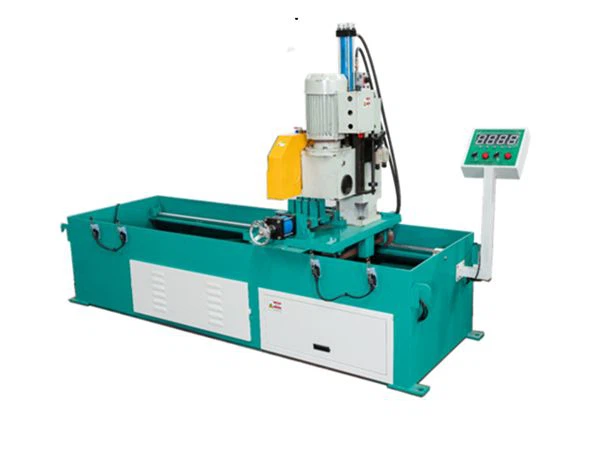

We are always ready to discuss your specific requirements and provide customized solutions. Whether you are a small - scale workshop or a large - scale manufacturing plant, our tube cutting machines can meet your needs. Contact us today to start a procurement discussion and take your tube processing to the next level.
References
- Laser Cutting Technology Handbook, 3rd Edition
- Journal of Manufacturing Processes, Vol. 25, "Advanced Detection and Compensation Techniques for Tube Laser Cutting"
- Proceedings of the International Conference on Machine Tools and Manufacturing, 2022, "Dealing with Surface Defects in Tube Laser Cutting"