


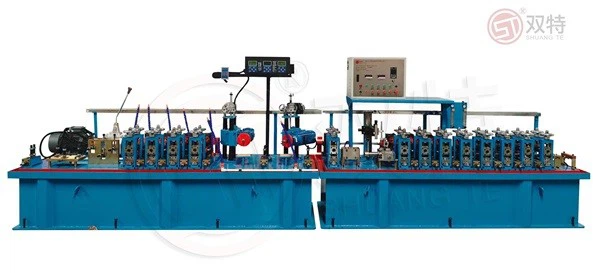
In the realm of modern manufacturing, intelligent decorative tube mills have revolutionized the production of decorative tubes. As a leading supplier of decorative tube mills, I've witnessed firsthand the transformative power of software systems in enhancing the efficiency, precision, and flexibility of these mills. In this blog post, I'll delve into the various software systems used in an intelligent decorative tube mill, exploring their functions, benefits, and how they contribute to the overall success of the manufacturing process.
1. Computer - Aided Design (CAD) Software
CAD software is the cornerstone of the design phase in a decorative tube mill. It allows designers to create detailed 2D and 3D models of the decorative tubes. With CAD, designers can experiment with different shapes, sizes, and patterns, ensuring that the final product meets the aesthetic and functional requirements of the customers.
One of the key advantages of CAD software is its ability to generate accurate technical drawings. These drawings serve as the blueprint for the manufacturing process, providing precise measurements and specifications for the tube mill. Moreover, CAD software enables easy modification of designs. If a customer requests a change in the tube's shape or pattern, designers can quickly make the necessary adjustments without starting from scratch.
For example, in the production of Public Facility Stainless Steel Tube Mill | Tube Making Machine for Urban Infrastructure, CAD software can be used to design tubes that fit seamlessly into urban infrastructure projects. The software can simulate how the tubes will look in the actual installation, helping designers to optimize the design for both visual appeal and structural integrity.
2. Computer - Aided Manufacturing (CAM) Software
Once the design is finalized in CAD, CAM software takes over. CAM software translates the design data from CAD into instructions that the tube mill can understand. It determines the optimal cutting paths, bending angles, and welding sequences for the tubes.
CAM software plays a crucial role in improving the manufacturing efficiency. By optimizing the cutting and bending processes, it reduces material waste and shortens the production time. For instance, in the production of Stainless Steel Furniture Tube Mill, CAM software can calculate the most efficient way to cut and bend the tubes to create furniture components. This not only saves material but also ensures that the components fit together perfectly, reducing the need for manual adjustments during assembly.
Another benefit of CAM software is its ability to integrate with other systems in the tube mill. It can communicate with the machine's control system, ensuring that the manufacturing process is carried out accurately and consistently. This integration also allows for real - time monitoring and adjustment of the manufacturing process, improving the overall quality of the tubes.
3. Manufacturing Execution System (MES)
An MES is a software system that manages and monitors the production process in real - time. It provides a centralized platform for tracking the progress of orders, managing inventory, and coordinating different departments in the tube mill.
One of the main functions of an MES is production scheduling. It takes into account factors such as machine availability, material inventory, and order priority to create an optimal production schedule. This helps to ensure that orders are completed on time and that the production capacity of the tube mill is fully utilized.
In addition, the MES provides real - time visibility into the production process. Operators can monitor the status of each machine, track the movement of materials, and identify any potential bottlenecks or issues. For example, in the production of Industrial - Grade Stainless Steel Construction Tube Mill Machine Manufacturer, the MES can alert operators if there is a shortage of raw materials or if a machine is experiencing a malfunction. This allows for quick action to be taken, minimizing downtime and ensuring the smooth operation of the tube mill.
4. Quality Control Software
Quality control is of utmost importance in the production of decorative tubes. Quality control software helps to ensure that the tubes meet the required standards and specifications. It can perform various functions, such as inspecting the tubes for defects, measuring their dimensions, and analyzing their surface finish.
This software uses advanced algorithms and sensors to detect even the smallest defects in the tubes. For example, it can identify cracks, scratches, or uneven thickness in the tube walls. By detecting these defects early in the production process, manufacturers can take corrective actions, such as reworking the tubes or adjusting the manufacturing parameters, to prevent defective products from reaching the market.
Quality control software also generates detailed reports on the quality of the tubes. These reports can be used for internal quality management purposes and can also be provided to customers as proof of the product's quality. This helps to build trust with customers and enhances the reputation of the tube mill.
5. Enterprise Resource Planning (ERP) Software
ERP software integrates all aspects of the business, including production, sales, finance, and human resources. It provides a comprehensive view of the company's operations, enabling better decision - making and resource management.
In the context of a decorative tube mill, ERP software can manage the supply chain. It can track the inventory of raw materials, place orders with suppliers, and manage the delivery schedules. This ensures that the tube mill always has an adequate supply of materials to meet the production demand.
ERP software also helps in managing the sales and customer relationship. It can track customer orders, manage invoicing and payments, and provide customer support. By having a centralized system for managing these functions, the tube mill can improve its customer service and increase customer satisfaction.
The Synergy of Software Systems
The real power of these software systems lies in their synergy. When integrated effectively, they create a seamless workflow in the decorative tube mill. For example, CAD and CAM software work together to ensure that the design is accurately translated into a physical product. The MES coordinates the production process, while the quality control software ensures that the product meets the required standards. The ERP software manages the overall business operations, from supply chain management to customer service.
This integrated approach not only improves the efficiency and quality of the production process but also enhances the competitiveness of the tube mill. By leveraging the capabilities of these software systems, the tube mill can produce high - quality decorative tubes at a lower cost and with a shorter lead time.

Conclusion
In conclusion, the software systems used in an intelligent decorative tube mill are essential for its success. From design and manufacturing to quality control and business management, these software systems play a crucial role in every aspect of the production process. As a supplier of decorative tube mills, I'm committed to providing our customers with the latest and most advanced software solutions to help them stay ahead in the market.
If you're interested in learning more about our decorative tube mills and the software systems that power them, or if you're looking to purchase a tube mill for your business, I encourage you to reach out to us. We'd be happy to discuss your specific requirements and provide you with a customized solution.
References
- Groover, M. P. (2010). Fundamentals of Modern Manufacturing: Materials, Processes, and Systems. Wiley.
- Nahmias, S. (2011). Production and Operations Analysis. McGraw - Hill.
- Turban, E., Leidner, D. E., McLean, E. R., & Wetherbe, J. C. (2006). Information Technology for Management: Transforming Organizations in the Digital Economy. Wiley.