


As a supplier of eddy current flaw detectors, I've had in - depth experiences and knowledge regarding the factors that can influence the results of these devices. One such crucial factor is lift - off, and understanding its effect on eddy current flaw detector results is of utmost importance for both our company and our clients.
Understanding Eddy Current Flaw Detection
Before delving into the impact of lift - off, it's essential to have a basic understanding of how eddy current flaw detectors work. Eddy current testing is an electromagnetic non - destructive testing (NDT) method. When an alternating current is passed through a coil in the eddy current probe, it generates an alternating magnetic field. When this probe is brought close to a conductive material, the alternating magnetic field induces eddy currents in the material. Any changes in the material, such as cracks, corrosion, or variations in conductivity, will cause a change in the eddy currents. These changes are then detected by the probe and analyzed by the eddy current flaw detector to identify potential flaws.
What is Lift - Off?
Lift - off refers to the distance between the eddy current probe and the surface of the test specimen. In an ideal testing scenario, the probe would be in direct contact with the specimen. However, in real - world applications, there are often factors that cause a separation between the probe and the specimen. This separation can be due to surface roughness, the presence of a coating on the specimen, or the mechanical setup of the testing equipment.
Effects of Lift - Off on Eddy Current Flaw Detector Results
Signal Amplitude Changes
One of the most significant effects of lift - off is the change in the amplitude of the eddy current signal. As the lift - off distance increases, the magnetic coupling between the probe coil and the test specimen decreases. This results in a reduction of the eddy currents induced in the specimen. Consequently, the signal detected by the probe also decreases in amplitude.
For example, when testing a smooth, uncoated metal surface with a very small lift - off (almost in contact), the eddy current signal will be relatively strong. But if there is a thick paint coating on the surface, which effectively increases the lift - off, the signal amplitude will drop significantly. This reduction in signal amplitude can make it more difficult to detect small flaws, as the flaw - related signal may be masked by the overall reduction in the background signal.
Phase Shift
Lift - off also causes a phase shift in the eddy current signal. The phase of the signal is related to the time - relationship between the input alternating current in the probe coil and the detected eddy current signal. As the lift - off increases, the phase of the detected signal changes.
This phase shift can be a problem because in eddy current testing, phase analysis is often used to distinguish between different types of flaws and to separate flaw signals from other noise sources. A significant lift - off - induced phase shift can make it challenging to accurately interpret the phase information, leading to misinterpretation of the test results. For instance, a crack and a change in lift - off might produce similar phase shifts in some cases, making it difficult to determine whether the detected signal is due to a flaw or just the lift - off effect.
False Indications
Lift - off can also lead to false indications in eddy current flaw detection. When the lift - off varies across the surface of the test specimen, it can create fluctuations in the eddy current signal that may be misinterpreted as flaws.
Consider a situation where a metal pipe has an uneven surface finish. As the eddy current probe moves along the pipe, the lift - off will change continuously. These lift - off variations can generate signal changes that mimic the signals produced by actual flaws. This can result in unnecessary further testing or even false rejection of parts that are actually defect - free.
Mitigating the Effects of Lift - Off
Lift - Off Compensation Techniques
To address the problems caused by lift - off, various lift - off compensation techniques have been developed. One common method is to use a reference specimen with a known lift - off. By comparing the signals from the test specimen with those from the reference specimen, the lift - off effect can be mathematically compensated.
Another approach is the use of multi - frequency eddy current testing. Different frequencies are affected by lift - off to different degrees. By analyzing the signals at multiple frequencies, it is possible to separate the lift - off effect from the flaw - related signals. This allows for more accurate flaw detection even in the presence of lift - off.
Proper Probe Design
Probe design also plays a crucial role in minimizing the impact of lift - off. Some probes are designed to be more tolerant of lift - off variations. For example, probes with a larger coil diameter are generally less sensitive to small changes in lift - off compared to probes with a small coil diameter. Additionally, probes with special shielding or magnetic core designs can help reduce the influence of lift - off on the eddy current signal.
Our Company's Solution
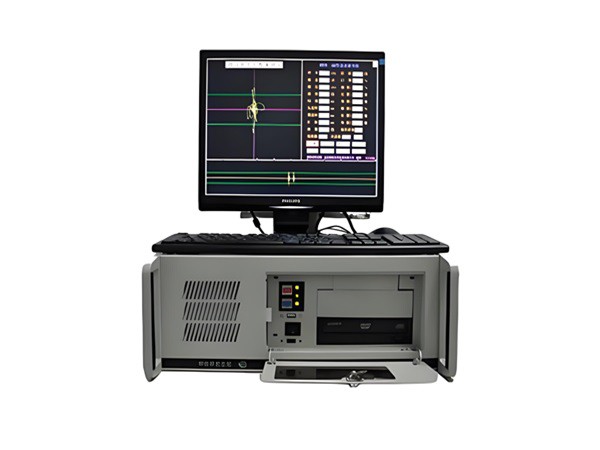
As an eddy current flaw detector supplier, we are committed to providing our customers with high - quality products that can effectively deal with the lift - off issue. Our High - Speed Automatic Eddy Current Flaw Detector for Steel Tubes is equipped with advanced lift - off compensation algorithms. These algorithms can quickly and accurately adjust the test results to account for lift - off variations, ensuring reliable flaw detection even in challenging testing environments.
Moreover, our R & D team is constantly working on improving probe designs to enhance lift - off tolerance. We understand that different industries have different testing requirements, and we strive to customize our solutions to meet those specific needs.
Conclusion
Lift - off is a significant factor that can have a profound impact on eddy current flaw detector results. It can cause changes in signal amplitude, phase shifts, and false indications, all of which can compromise the accuracy of flaw detection. However, with the right compensation techniques and proper probe design, these effects can be mitigated.
If you are in need of an eddy current flaw detector that can provide accurate results even in the presence of lift - off, we invite you to contact us for a detailed discussion. Our team of experts is ready to assist you in choosing the most suitable solution for your specific application. We look forward to working with you to ensure the quality and safety of your products through reliable eddy current flaw detection.
References
- Beckwith, T. G., Buck, N. L., & Marangoni, R. D. (2007). Mechanical Measurements. Addison - Wesley.
- Rose, J. L. (2014). Ultrasonic Waves in Solid Media. Cambridge University Press.
- Blitz, J., & Simpson, F. (1999). Industrial Applications of Nondestructive Testing. Chapman & Hall.