



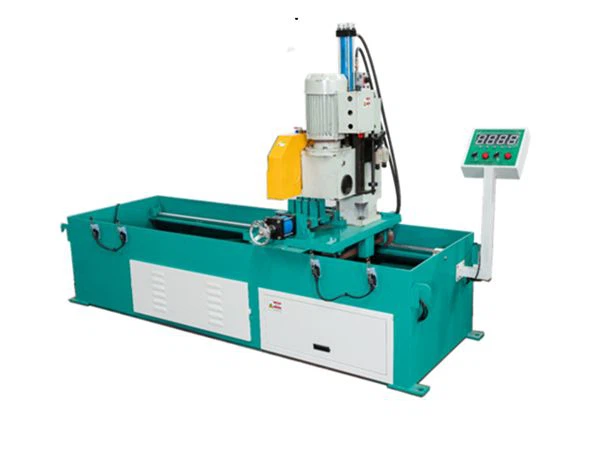
As a supplier of Servo Tube Cutting Machines, I am frequently asked about the communication interfaces of these advanced pieces of equipment. Understanding the communication interfaces is crucial as it directly impacts the machine's functionality, efficiency, and integration with other systems. In this blog, I will delve into the various communication interfaces of a servo tube cutting machine, their benefits, and how they enhance the overall performance of the machine.
Types of Communication Interfaces
Ethernet Interface
One of the most common communication interfaces in modern servo tube cutting machines is the Ethernet interface. Ethernet provides a high - speed and reliable way to transfer data between the machine and other devices such as a computer, a programmable logic controller (PLC), or a network server. With an Ethernet interface, operators can remotely monitor and control the cutting process. They can access real - time data about the machine's status, such as the cutting speed, the position of the cutting head, and the remaining material length.
For example, a manufacturing facility with multiple servo tube cutting machines can use an Ethernet network to connect all the machines to a central control system. This central system can then manage the production schedule, assign tasks to individual machines, and collect data for analysis. The Ethernet interface also enables software updates to be easily installed on the machine, ensuring that it always operates with the latest features and bug fixes.
USB Interface
The Universal Serial Bus (USB) interface is another important communication interface in servo tube cutting machines. USB provides a simple and convenient way to transfer data between the machine and external storage devices or other USB - enabled devices. For instance, operators can use a USB flash drive to transfer cutting programs from a computer to the machine. This is particularly useful when creating new cutting patterns or modifying existing ones.
Moreover, the USB interface can be used for data backup. Machine operators can regularly back up important data such as production records, machine settings, and cutting programs to a USB drive. In case of a system failure or data loss, the machine can be quickly restored using the backed - up data.

RS - 232 Interface
The RS - 232 interface is an older but still widely used communication interface in servo tube cutting machines. It is a serial communication protocol that allows for the transfer of data between the machine and other devices at relatively low speeds. RS - 232 is often used to connect the machine to legacy devices such as older computers or specialized control panels.
One of the advantages of the RS - 232 interface is its simplicity and compatibility. Many older machines and devices are equipped with RS - 232 ports, making it easy to integrate the servo tube cutting machine into existing systems. However, compared to Ethernet and USB, RS - 232 has a lower data transfer rate and a limited communication distance.
Benefits of Communication Interfaces
Improved Efficiency
Communication interfaces play a vital role in improving the efficiency of servo tube cutting machines. By enabling remote monitoring and control, operators can make real - time adjustments to the cutting process without having to be physically present at the machine. This reduces downtime and increases productivity. For example, if a machine detects a problem during the cutting process, such as a clogged blade or a misaligned tube, the operator can receive an alert on their computer or mobile device and take immediate action.
Integration with Other Systems
The ability to communicate with other systems is essential for modern manufacturing processes. Servo tube cutting machines with communication interfaces can be easily integrated into a larger production line. They can exchange data with other machines, such as bending machines or welding machines, to ensure a seamless production flow. For instance, the cutting machine can send information about the cut tubes to the bending machine, which can then adjust its settings accordingly.
Data Collection and Analysis
Communication interfaces allow for the collection of a large amount of data from the servo tube cutting machine. This data can be used for various purposes, such as quality control, predictive maintenance, and process optimization. By analyzing the data, manufacturers can identify trends, detect potential problems before they occur, and make informed decisions to improve the overall performance of the machine.
Comparison with Other Tube Cutting Machines
When comparing servo tube cutting machines with other types of tube cutting machines, such as Saw Blade Tube Cutting Machine and Tube Laser Cutting Machine, the communication interfaces give servo tube cutting machines an edge in terms of flexibility and integration.
Saw blade tube cutting machines are often more mechanically focused, with less emphasis on digital communication. While they are effective for basic cutting tasks, they may lack the ability to communicate with other systems and provide real - time data. On the other hand, tube laser cutting machines are highly advanced in terms of cutting precision but may have more complex communication requirements. Servo tube cutting machines strike a balance between cutting performance and communication capabilities, making them suitable for a wide range of applications.
Conclusion
In conclusion, the communication interfaces of a servo tube cutting machine are essential components that enhance its functionality, efficiency, and integration with other systems. Ethernet, USB, and RS - 232 interfaces each have their own advantages and are used for different purposes. By understanding these communication interfaces, manufacturers can make the most of their servo tube cutting machines and improve their overall production process.
If you are interested in learning more about our Servo Tube Cutting Machine or have any questions regarding its communication interfaces, please feel free to contact us. We are more than happy to discuss your specific requirements and provide you with the best solutions for your tube cutting needs. Let's work together to take your production to the next level.
References
- "Industrial Communication Technology Handbook" by Peter R. Cheeseman
- "Automation Technology for Manufacturing Systems" by Mikell P. Groover