


Auxiliary equipment in a water treatment plant plays a crucial role in ensuring the efficient, effective, and reliable operation of the overall water treatment process. As a dedicated auxiliary equipment supplier, I have witnessed firsthand how these components contribute to the success of water treatment facilities. In this blog, I will delve into the various functions of auxiliary equipment in a water treatment plant.
Monitoring and Control Functions
One of the primary functions of auxiliary equipment in a water treatment plant is monitoring and control. Devices such as sensors, meters, and controllers are essential for continuously measuring and regulating various parameters of the water treatment process. For example, pH sensors can measure the acidity or alkalinity of the water, allowing operators to adjust the dosing of chemicals such as acids or alkalis to maintain the desired pH level. Flow meters can measure the rate of water flow through different stages of the treatment process, enabling operators to optimize the operation of pumps and other equipment.
Controllers are used to automate the operation of the water treatment plant based on the data collected by the sensors and meters. Programmable Logic Controllers (PLCs) are commonly used in water treatment plants to control the operation of pumps, valves, and other equipment. They can be programmed to perform complex control algorithms, such as adjusting the chemical dosing rate based on the water quality and flow rate. This automation not only improves the efficiency of the water treatment process but also reduces the risk of human error.
Chemical Dosing and Mixing Functions
Chemical dosing is an important part of the water treatment process, used for disinfection, coagulation, flocculation, and pH adjustment. Auxiliary equipment such as chemical dosing pumps, mixers, and storage tanks are used to accurately deliver and mix the chemicals into the water.
Chemical dosing pumps are designed to deliver a precise amount of chemical solution into the water at a controlled rate. They can be either positive displacement pumps, such as diaphragm pumps or piston pumps, or centrifugal pumps. The choice of pump depends on the type of chemical, the required flow rate, and the pressure. Mixers are used to ensure that the chemicals are evenly distributed throughout the water. They can be mechanical mixers, which use rotating impellers to create turbulence, or static mixers, which use fixed elements to divide and recombine the flow.
Storage tanks are used to store the chemicals before they are dosed into the water. They are typically made of materials that are resistant to the chemicals, such as polyethylene or fiberglass. The tanks are equipped with level sensors to monitor the chemical level and prevent overfilling or running out of chemicals.
Filtration and Separation Functions
Filtration and separation are key processes in water treatment, used to remove suspended solids, microorganisms, and other contaminants from the water. Auxiliary equipment such as filters, membranes, and clarifiers are used to perform these functions.
Filters are used to remove solid particles from the water by passing it through a porous medium. There are different types of filters, including sand filters, activated carbon filters, and cartridge filters. Sand filters are commonly used in water treatment plants to remove large particles and turbidity. Activated carbon filters are used to remove organic compounds, chlorine, and other contaminants that can affect the taste and odor of the water. Cartridge filters are used for fine filtration, removing small particles and microorganisms.
Membranes are used for more advanced filtration and separation processes, such as reverse osmosis, ultrafiltration, and microfiltration. Reverse osmosis membranes are used to remove dissolved salts, heavy metals, and other contaminants from the water by applying pressure to force the water through a semi - permeable membrane. Ultrafiltration and microfiltration membranes are used to remove larger particles, such as bacteria and viruses.

Clarifiers are used to separate suspended solids from the water by gravity settling. They are typically large tanks where the water is allowed to flow slowly, allowing the solids to settle to the bottom. The clarified water is then removed from the top of the tank.
Aeration and Oxygenation Functions
Aeration and oxygenation are important processes in water treatment, especially for biological treatment processes. Auxiliary equipment such as aerators and diffusers are used to introduce air or oxygen into the water.
Aerators are used to increase the oxygen content in the water by creating a large surface area for gas exchange. There are different types of aerators, including mechanical aerators, which use rotating blades or disks to splash the water into the air, and diffused aerators, which use porous diffusers to release air bubbles into the water. Diffused aerators are more efficient in terms of oxygen transfer and are commonly used in large - scale water treatment plants.
Oxygenation is also important for the growth of aerobic bacteria, which are used in biological treatment processes to break down organic matter in the water. By providing sufficient oxygen, the aerobic bacteria can efficiently decompose the organic pollutants, reducing the biochemical oxygen demand (BOD) and chemical oxygen demand (COD) of the water.
Maintenance and Support Functions
Auxiliary equipment also plays an important role in the maintenance and support of the water treatment plant. Equipment such as cranes, hoists, and forklifts are used for the installation, removal, and maintenance of heavy equipment.
Cranes and hoists are used to lift and move heavy components, such as pumps, motors, and large filters. They are essential for the installation and replacement of equipment during maintenance and upgrade projects. Forklifts are used to transport materials and equipment within the plant, such as chemical drums and spare parts.
In addition, testing and analysis equipment, such as laboratory analyzers, are used to monitor the water quality and the performance of the treatment process. These analyzers can measure various parameters, such as the concentration of contaminants, the pH, and the turbidity of the water. Regular testing and analysis are essential for ensuring that the water treatment plant is operating effectively and producing water that meets the required quality standards.
Related Products for Water Treatment and Industrial Processes
If you are also involved in industrial processes related to water treatment or other industries, you may be interested in some of our other products. For example, we offer the Industrial Petrochemical Tube Mill Machine for Stainless Steel Pipe Production, which is designed for the production of high - quality stainless steel pipes used in petrochemical and other industries.
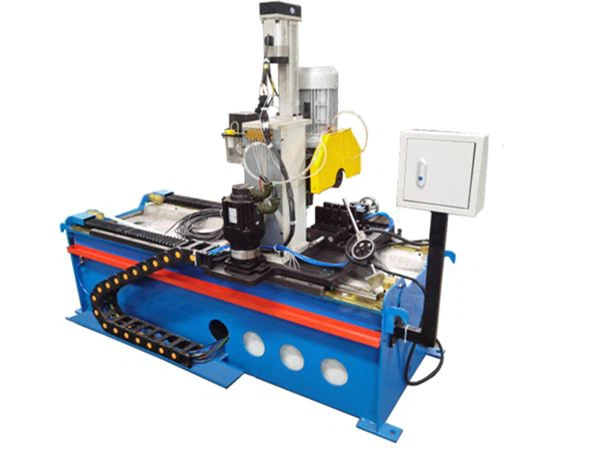
Our Servo Tube Cutting Machine is a precise and efficient tool for cutting tubes of different materials and sizes. It can be used in various industries, including water treatment plants for the fabrication of pipe systems.
The Steel Tube Online Bright Annealing Machine is another important product that can improve the quality and performance of steel tubes by annealing them in a controlled environment.
Conclusion
In conclusion, auxiliary equipment in a water treatment plant performs a wide range of functions, from monitoring and control to chemical dosing, filtration, aeration, and maintenance. These functions are essential for the efficient, effective, and reliable operation of the water treatment process. As a supplier of auxiliary equipment, we are committed to providing high - quality products and solutions to meet the needs of water treatment plants.
If you are interested in our auxiliary equipment for your water treatment plant or other industrial applications, we invite you to contact us for further discussion and procurement negotiation. We have a team of experienced professionals who can provide you with detailed product information, technical support, and customized solutions.
References
- Metcalf & Eddy. (2003). Wastewater Engineering: Treatment and Reuse. McGraw - Hill.
- AWWA. (2017). Water Treatment Plant Design. American Water Works Association.