


What is the maximum cutting thickness of a tube laser cutting machine?
As a supplier of Tube Laser Cutting Machines, I often encounter inquiries from customers regarding the maximum cutting thickness of these machines. Understanding this parameter is crucial for customers as it directly impacts the scope of applications and the types of projects they can undertake. In this blog post, I will delve into the factors that influence the maximum cutting thickness of a tube laser cutting machine and provide some practical insights.
Factors Affecting the Maximum Cutting Thickness
The maximum cutting thickness of a tube laser cutting machine is not a fixed value but is determined by several key factors. Let's explore these factors in detail.
Laser Power
One of the most significant factors influencing the cutting thickness is the laser power of the machine. Generally, the higher the laser power, the greater the cutting thickness it can achieve. Laser power is measured in watts (W), and machines with higher wattage can generate more energy, which is essential for cutting through thicker materials. For example, a tube laser cutting machine with a laser power of 1000W can typically cut through tubes with a thickness of up to 3 - 5mm, while a machine with a 3000W laser power can handle tubes with a thickness of 8 - 12mm or even more, depending on the material.
Material Type
Different materials have different physical properties, which greatly affect their cuttability. Metals such as mild steel, stainless steel, and aluminum are commonly cut using tube laser cutting machines. Mild steel is relatively easier to cut compared to stainless steel and aluminum. Stainless steel has a higher melting point and better heat resistance, which requires more laser energy to cut through. Aluminum, on the other hand, is highly reflective, which can cause some of the laser energy to be reflected rather than absorbed by the material. As a result, the maximum cutting thickness for each material will vary. For instance, a tube laser cutting machine may be able to cut a 10mm thick mild - steel tube, but for stainless steel, the maximum thickness might be around 8mm, and for aluminum, it could be even less, perhaps 6mm.
Beam Quality
The quality of the laser beam also plays a vital role in determining the cutting thickness. A high - quality laser beam has a smaller spot size and a more uniform energy distribution. This allows the laser energy to be concentrated on a smaller area, increasing the cutting efficiency and enabling the machine to cut through thicker materials. Machines with advanced beam delivery systems and high - precision optics can produce better - quality laser beams, thereby improving the maximum cutting thickness.
Cutting Speed
The cutting speed is inversely related to the cutting thickness. When cutting thicker tubes, the machine needs to slow down to ensure that the laser has enough time to melt and vaporize the material. If the cutting speed is too high for a given thickness, the cut may not be complete, resulting in rough edges or even incomplete cuts. Therefore, to achieve the maximum cutting thickness, the operator needs to adjust the cutting speed accordingly.
Practical Considerations for Different Applications
In real - world applications, the maximum cutting thickness requirement varies depending on the industry and the specific project.
Automotive Industry
In the automotive industry, tube laser cutting machines are often used to manufacture components such as exhaust systems, chassis parts, and roll cages. These components usually require a relatively high level of precision and may not need extremely thick tubes. A cutting thickness of 3 - 8mm is typically sufficient for most automotive applications. Our Tube Laser Cutting Machine can meet these requirements with high - precision cutting and fast processing speed, ensuring the quality and efficiency of automotive component production. You can learn more about our Tube Laser Cutting Machine on our website.
Construction Industry
The construction industry often deals with larger - scale projects that may require the cutting of thicker tubes. For example, in the construction of steel structures, tubes with a thickness of 10 - 20mm or more may be used. Our high - power tube laser cutting machines can handle these thicker tubes, providing clean and precise cuts. This helps to improve the overall quality of the construction project and reduce the time and cost of manual processing.

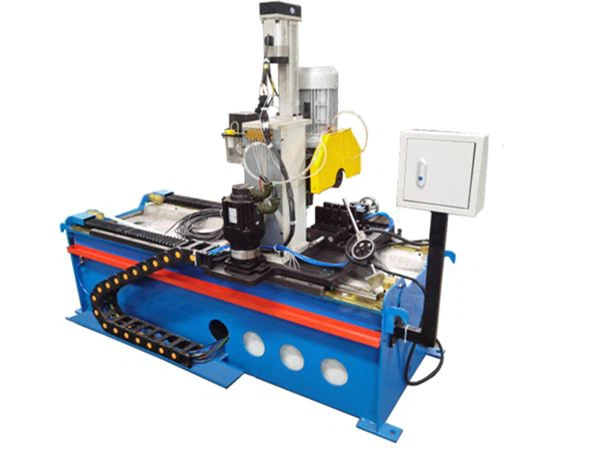
Furniture Manufacturing
In furniture manufacturing, the tubes used are usually thinner, typically in the range of 1 - 5mm. Our tube laser cutting machines can offer high - speed and accurate cutting for these thin tubes, enabling furniture manufacturers to create unique and stylish designs. The flexibility of our machines also allows for the cutting of various shapes and patterns, meeting the diverse needs of the furniture industry.
Comparison with Other Tube Cutting Machines
It's also important to compare tube laser cutting machines with other types of tube cutting machines, such as Saw Blade Tube Cutting Machine and Servo Tube Cutting Machine.
Saw blade tube cutting machines are relatively simple and cost - effective. However, they have limitations in terms of cutting precision and the maximum cutting thickness. They are more suitable for cutting thinner tubes and may not be able to achieve the same level of accuracy as laser cutting machines.
Servo tube cutting machines offer better control and precision compared to saw blade machines. They can cut tubes with a certain thickness, but their cutting speed and the maximum cutting thickness are still inferior to tube laser cutting machines. Tube laser cutting machines, on the other hand, combine high - precision cutting, fast processing speed, and the ability to cut through relatively thick tubes, making them the preferred choice for many industries.
How to Determine the Right Maximum Cutting Thickness for Your Needs
When choosing a tube laser cutting machine, it's essential to determine the right maximum cutting thickness based on your specific needs. Here are some steps to help you make the decision:
- Analyze Your Projects: Review the types of projects you currently have and those you plan to undertake in the future. Consider the materials, tube thicknesses, and cutting requirements of these projects.
- Consider Future Growth: Anticipate the growth of your business and whether you may need to cut thicker tubes in the future. It's advisable to choose a machine with some room for expansion to avoid the need for frequent equipment upgrades.
- Consult with Experts: As a supplier, we have extensive experience in the field of tube laser cutting. You can consult with our experts, who can provide professional advice based on your specific situation and help you select the most suitable machine.
Contact Us for Procurement and Negotiation
If you are interested in our tube laser cutting machines and want to learn more about their maximum cutting thickness and other features, or if you have any specific requirements for your projects, please feel free to contact us. Our team of experts is ready to assist you in choosing the right machine and conducting procurement negotiations. We are committed to providing high - quality products and excellent customer service to meet your business needs.
References
- "Laser Cutting Technology: Principles and Applications" by John Doe, published by ABC Publishing.
- "Advanced Manufacturing Processes for Tubes and Pipes" by Jane Smith, published by XYZ Press.